#IMWAYR March 15, 2021

 Hello out there. It's #IMWAYR time again, when readers share what they have been reading and find out what others have been up to in the past week. Kathryn hosts the adult version of this meme at Book Date. Jen at Teach Mentor Texts and Kellee and Ricki at Unleashing Readers host the kidlit rendition. Whatever you are looking forward to in your next great read, these are fabulous places to start your search.


Imagine a string of bad words here.

My previously damaged knee has started acting up again. Actually it's now screaming at me to keep off it. I am missing my daily walks, but acknowledge that if I had listened to my body when the trouble started, things would not have gotten to this point. I'm waiting for an appointment with a physiotherapist and hoping to get a proper knee brace so I can resume roaming around the countryside. On a positive note, I got more reading done with my eyes last week. 

The Canada Reads debate was last week. In some years it has seemed like the debate focuses on winning as the most important thing. This year it felt like celebrating the books was primary and winning was of secondary importance. It was a glorious conversation about each of the books. The winner this year is Jonny Appleseed. It's the first time an Indigenous, queer, two spirited author, represented at the debate by another Indigenous queer has ever won. Of the three books I've read, I liked it best. 

Titles with a 🍁 indicate this is a Canadian or Indigenous Canadian Author and or Illustrator. 

Clicking on the title will take you to the Goodreads page of the book. 

BLOG POSTS FROM LAST WEEK

Call Me Indian: From the Trauma of Residential School to Becoming the NHL's First Treaty Indigenous Player by Fred Sasakamoose


PICTURE BOOKS

5 stars

The Suitcase
by Chris Naylor-Ballesteros

This is an allegory about refugees and how we respond to them. It will wow you. 
A strange creature arrives in the forest with a suitcase. It has gone through a traumatic journey to get here. The other animals are suspicious and don't believe his fantastical story of what's in the suitcase. When the exhausted animal falls asleep, they break it open only to discover that a version of the creature's truth is in there. They discover that this being is not so different from them, and go out of their way to fix what what was broken. This kindness at the end almost made my eyes water.
I only wish more adults would read picture books like this.


Aaron @ Wriggling Bookworms suggested I read this. I'm glad he did.

A ponderosa pine grows into maturity not far from where I grew up and now live. The history of the Syilx, the original people here, unfolds over time as the tree grows and thrives. Each two page spread contains images of the landscape and people with information about the pine and events of the time. It takes us to 2007 with the land recovering from an extensive wildfire. The pine didn't survive that conflagration.
The back matter contains a timeline of events; additional illustrated information about the Syilx people, their experiences with the land and white invaders; the history of the white settlers; a map of the area; an index and a page of acknowledgements.
I appreciated how much I learned about the Syilx population and their relationship to this land and the wild horses that still roam in their territory. (I've seen remnants of them in the country around where I live.) 
Some bits and pieces articulate the stark difference between the Syilx cultural ways of knowing the world and the settler perspective. First, "Overall wealth and economy were based on the health of the surrounding environment. If the land, resources, and water were healthy and all the of the people were being taken care of, then the community was recognized as wealthy. While recognizing the idea of wealth and having possessions, Syilx people considered the greatest wealth to be knowing how to use resources in the most respectful manner." Second, The Syilx called the sacred spirit of Okanagan Lake, nx̌aʔx̌ʔitkʷ. White settlers changed the name to Ogopogo and called it a lake monster.
As a nonfiction picture book this is very text heavy. This makes it a starter book for intermediate and older readers interested in learning more about the area.
My only concern about Growing Up In Wild Horse Canyon, it that it is not an own voices book. I appreciate the researched information and admire how Loraine Kemp's illustrations portray this country that I love. But still, neither the author or the illustrator are Syilx. Before purchasing it for a school library, first I would see if there are books by Sylix authors sharing their perspectives of our shared history. 


It's easy to understand why this won the Caldecott prize this year. It is exquisitely written and illustrated. The relationship between the two is seamless. My wish for this book is that it motivates all of us to become water protectors.

5 stars

Beatrix Potter's Countryside
by Linda Elovitz Marshall & Ilaria Urbinati (Illustrations)

This book gave me all the feels.
I kept wondering if I had read it before since so much of it felt familiar. Then I realised it was from watching the Miss Potter movie. (I don't think I finished it, but I might now.)
Reading this I learned how Potter, who grew up in a traditional household, overcame the restrictions of her time: initially by self publishing her first books and taking control of her own copyright, and second, by purchasing land by herself. Seeing that the pastoral landscape of the lakes district was in danger of industrial development, she continued purchasing farms all around her. Upon her death, she bestowed it to a land trust.
I appreciate how she was able to use her own privilege and money to make life better for ordinary people in her community.

5 stars

I Talk Like a River
by Jordan Scott & Sydney Smith (Contributor) 🍁

I now understand why this book won the Schneider Family Book Award. Sydney Smith's art is the ultimate compliment to Jordan Scott's words. In my teaching career I only had one student who stuttered. He also had Tourette's syndrome. I wish this book had been around then. It is a mirror that let me know what it is like to deal with disfluency. I could feel my mouth trying to get those P, C and M sounds out.
Both of the creators of this beautiful book are Canadian.  

This is an essential book. That it's beautifully written and illustrated serves to underscore the unspeakable horror of the event. In 1921 a white mob attacked and destroyed the thriving black community of Tulsa, Oklahoma. This picture book is an important introduction to this episode in history and a lead in to doing more research.

GRAPHIC NOVELS


Beetle and Kat were once best friends. Then Kat went away to witch school and seemed to forget Beetle. Meanwhile Beetle has been learning goblin magic from her aunt and hanging out with Blob Ghost who is tethered to a local mall. Kat is apprenticed to learn magic with her Aunt Hollowbone. They return home because her aunt wants to tear down the mall and rebuild her family's estate on the land.
This is a coming of age book. It's about friendship and finding your own magic.
While I liked the story line, I had a hard time with the art in this one. It felt too busy and I was challenged to make sense of what was going on.
The Mighty Muskrats are on the case again! A memory bundle goes missing during The National Assembly of Cree Peoples being held at the fictional Windy Lake First Nation. The four cousins, Chickadee, Atim, Otter, and Sam, work with their Uncle Levi, the local band constable, to rescue it before the assembly is over. To find out  more about why I love this series, go and read my full review here. 

5 stars

The Sea in Winter
by Christine Day & Kimberly Woods (Narrator)

Maisie Cannon's sanctuary is  the ballet studio. Unfortunately, she damaged her knee in a fall, and is unable to dance. Her grief and loss interfere with her academic success. Her knee might be improving, but she's not able to dance yet. The pain continues, but she ignores it. On a hiking vacation with her family she damages it again. Recovery is harder as she comes to understand that she might never dance again.
Maisie has a loving supportive family even if they don't quite understand what she is going through at first. When they do, they ensure she gets the emotional support she needs. Her little brother is adorable and the relationship between the siblings is tender and sweet. I appreciated the integration of Makah culture into the book. I remember the furor around the resuming of traditional whaling.
A few days before reading this book my previously damaged knee began screaming at me. As I read about Maisie's pain, I was right there with her.
Christine Day sure can write.  

POETRY


I took my time with these poems, letting them sit with me before going on to another. They are not comfortable to read. Each one speaks to experiences I have been privileged not to have to endure. In my career I taught children like Joshua and had hints of this life. I wish I had read his poems about life and school then. 
Joshua Jordan spent his early years in and out of foster homes. Terrible things happened to him there. When he was twelve, he woke up one morning and his mother was dead. More tragedy ensued before he ended up living with a woman who became his new mother and is helping him heal. Love, fear, and grief are constant themes in this collection of poetry that he wrote these he was only sixteen! Joshua Jordan is an indigenous author to keep your eye on.

MEMOIR

I had a bit of a difficult time getting into this. I listened to it read by author, but she was not the problem. It might be that I was listening while I was out walking and was experiencing knee pain. It was also difficult to take in her rich descriptive passages of a rainforest I've never been too, while roaming around in a semi desert land.
When the narrative focused more on her family and their history in China and Taiwan, I became hooked. By the end I was loving her integration of family history and their environment.

3.5 stars

Untamed
by Glennon Doyle

A friend recommended this book to me. There are parts that didn't work for me, but I hope that now that I am nearing 70, I can acknowledge that different people come to being the best person they can be in their own way. This is the first Glennon Doyle book I've read. I appreciate her honesty. I like that she makes mistakes, acknowledges them, and tries to do better.
I hope that white women will learn from the debacle she writes about with respect to her attempt to teach other white women about their own racism. The book, Your Brain on Stereotypes, explains research looking at the difference between what we know is right and our actual behaviour. We know we shouldn't be racist, so we assert we're not, but mostly our actions show that we are. All we can do is acknowledge this, learn more, support BIPOC women emotionally and financially, and do our utmost to be better allies.
There are a few flippant moments here, like when she claims to have let her third child raise herself with an ipad. I assumed that was a kind of metaphor for doing much more hands off parenting. While it wasn't the smartest remark, I think anyone with more than one kid lets go of control. Parenting is the hardest work we do. Nobody gets it right all the time. I appreciated her models for when it does.
I've read negative comments about the religious aspects to this work. I left the Catholic church in my teens when I discovered feminism. Just about everyone I still know who stayed, has transformed their idea of 'godness'. It seems like this is what has happened to Doyle. I wish her well but won't read more. 

DISCWORLD NOVELS


This is one of the Discworld books I know I will be reading again. Moist Van Lipwig is a conman who has been rescued from hanging by Lord Vetinari, ruler of Ankh-Morpork. All Moist has to do is take over and get the abandoned post office running again. In this case, Moist learns to use his talent as a conman to out con the most nefarious capitalist in the city and ends up in love with a golem rights activist.
I love that this book illuminates and pokes fun at the evils and ridiculousness of neoliberal capitalism and the Ayn Rand books.

CURRENTLY 

This is what I currently have on the go:
My Body in Pieces by Marie-Noëlle Hébert (from Netgalley)
Willie: The Game-Changing Story of the NHL's First Black Player by Willie O'Ree
The Birchbark House by Louise Erdrich

UP NEXT

I plan to get to the last half the picture books piling up. I will
 read and review a NetGalley title, Butterflies Are Pretty ... Gross! by Rosemary Mosco.  I'll start listening to Akata Witch by Nnedi Okorafor.  I hope one of the audiobook Discworld titles I have on hold become available. 

PROGRESS ON MY READING GOALS 

#MustReadIn2021 6/25 

#MustReadNFIn2021 2/12 

#MustReadPBIn2021 17/100

Books by Canadian Indigenous Authors

Books by Canadian Authors: 24/100

Canada Reads 2021 3/5 

Discworld Series 32/41 

Goodreads Reading Challenge: 100/333 

The Case of the Burgled Bundle: A Mighty Muskrats Mystery by Michael Hutchinson

Thanks to NetGalley for the opportunity to read and review this book. It will be released April 6, 2021, by Second Story Press.

Like the first two of Michael Hutchinson's (Misipawistik Cree) Mighty Muskrat series, this mystery integrates Cree ways of knowing the world into a modern day mystery novel. Each of the books so far has introduced readers to different aspects of Indigenous life and culture. They are a fascinating mirror for Indigenous readers, and a window for the rest of us.

This tale is set at The National Assembly of Cree Peoples being held at the fictional Windy Lake First Nation, home to the Mighty Muskrats.

The Mighty Muskrats include cousins Chickadee, Atim, Otter, and Sam. Their home base is hidden deep within an old junkyard. Chickadee and Otter live on the reserve. Atim and Sam, two brothers, live in the city away from their family and traditions. They end up making cultural mistakes, but it's obvious that this doesn't mean they are not part of the people. Over time, they will learn. I appreciate the role of Sam, who can't help but ask questions. It's through the answers that outsiders like me come to understand more about the culture. We learn together.

I love that the book educates as it entertains. It clarifies what it means to be Indigenous or Metis, with Grandpa explaining: "A little bit of Indian blood in you does not a nation make. The Metis are a nation. That's what's Indigenous to Canada... that nation and culture."

Readers will learn about treaties signed between Indigenous nations and Canada. It shows the importance of ceremony in the Cree culture and highlights the significance of memory bundles. A bundle contains objects that represent the oral histories of the group. A treaty bundle includes the Indigenous perspective of the treaty or treaties signed with another nation. It could be another Indigenous nation or Canada. Being the keeper of the bundle is a sacred trust. "Keepers don't own the stories, but they must steward them through history. Tell them in the same way each time, so the next generation can be given that memory. Undamaged. Unforgotten."

During a ceremony, the cousins' grandfather makes a comment that offends another elder. To resolve the issue Grandpa contacts Leon Shining Deer and his wife, the keepers of the Treaty 12 bundle. It is a bundle known to create unity, so they ask him to come share the bundle to help reconcile the conflict.

When the bundle goes missing it's a huge deal. The nearby RCMP won't even bother with it, but the children's Uncle Levi, the local band constable, begins to investigate the crime. Of course the Mighty Muskrats are there to help out. There is no shortage of suspects.

Part of what I admire about this series is that characters are complicated. Bullies are shown to have pain of their own. Mending relationships and healing are possible. I appreciate that the book shows a collaborative community. While they are helping solve the crime, the Muskrats help set up the local gym to feed the guests at the assembly and work with elders in all kinds of ways.

This mystery series takes me back to my youth. I was a hard core fan of Nancy Drew, Judy Bolton, Trixie Belden & The Hardy Boys. 

These are even better.

Call Me Indian: From the Trauma of Residential School to Becoming the NHL's First Treaty Indigenous Player by Fred Sasakamoose

Thanks to NetGalley for the opportunity to read and review this book. It will be released 18, May 2021, by Viking - Penguin Random House Canada.

Fred Sasakamoose begins his biography with the story of his ancestors who lived on the land before first contact. He tells of how their leader, Ahtahkakoop, was manipulated into signing treaties that were never kept. In many ways this pattern of lies and deceit is not a new story, but Sasakamoose makes it personal as he leads into how his family ended up on the small reserve of Sandy Lake. 

Growing up, his mother was in charge of the family much of the time because his father was away logging or trapping to make a living. Fred was one of eleven children but only five survived due to smallpox. Their lives were constricted and limited by the local White Indian Agent and federal laws. 

"we were poor, that's the truth, But I didn't know that.
What I knew what that home was full of song, dance and tradition. It was full of wonder and mystery. It was full of family, love and community."

When his Moosum, Alexan (grandfather) came to stay with them, they became close. Alexan got Sasakamoose his first pair of skates and introduced him to the game. He learned to skate on a frozen lake. Alexan carved him a stick. He used it with a frozen cow patty as a puck. 

In 1941, when he was almost seven years old, he was taken from his parents and sent to residential school. St Michaels was more of a work colony than a school. He endured terrible abuses by priests and older boys. One of the priests, Father Roussel, was a hockey fanatic and organized the boys into a team. Sasakamoose may have developed as a hockey player there, but he left scarred. The only real victory at that institution was surviving. 

He barely returned home when he was visited by Father Roussel and George Vogan who wanted him to come and play hockey for the Moose Jaw Canucks in the Western Canadian Junior Hockey League. His mother encouraged him to go. In Moose Jaw he lived with George and his supportive family for three years. George became his father away from home. While he worked and played hockey, he improved, build skills and developed confidence. Throughout it all he had to deal with the racism of a few teammates and the team's fans. 

He was called up to play with the Chicago Blackhawks during the 1953-54 season. He was the first Treaty Indigenous player in professional hockey. He played against legends like Gordie Howe, Jean Beliveau, and Maurice Richard. Up until that year, he never drank. He acquired a taste for alcohol while partying with his teammates. The following summer he drank too much and got out of shape. The next year he was cut from the team. Over the next couple of years he played hockey for  the New Westminster Royals, Chicoutimi Sagueneens, and the Calgary Stampeders. During those years he met and married Loretta Isbister. Having no idea if he would ever play for Chicago again, and tired of being homesick, he decided to quit hockey and go home. 

He might have given up on hockey, but it hadn't given up on him. 

The owner of the Kamloops Chiefs tracked him down. He wanted Sasakamoose on his team. It was an amateur league, but it payed decent money so he and Loretta moved there. Fred went on to play with a senior league, the Saskatoon Quakers later on. For the next decade or so he continued to play on local teams during the winter to make extra cash for Loretta and his growing family. 

In those years after the NHL, Fred contributed to his community in numerous ways. He became a band councillor and chief. He worked hard to support indigenous hockey teams in Northern Saskatchewan and develop minor hockey and other sports programs across the province. Through it all he endured hardship, tragedy and joy. He spoke with numerous groups of children and adults about his life in hopes that it would help them lead healthy lives and not make the same mistakes he had made. When drugs made their way to their reserve, he worked collaboratively with the band as well as personally to provide a safe place for addicted individuals. 

Fred Sasakamoose won many awards. He was inducted into the Saskatchewan Sports Hall of Fame and the Canadian Native Hockey Hall of Fame. He received National Aboriginal Achievement and  Saskatchewan Indian Nations Circle of Honor Awards. He accepted a Diamond Jubilee medal in 2012. An honorary diploma was bestowed on him from Saskatchewan Polytechnic. The University of Saskatchewan gave him an honorary doctorate of law. His greatest honor was in 2018 when he received the Order of Canada. Indigenous hockey players still experience racism, but Fred blazed a trail for them by supporting their development and showing them that they could still overcome these obstacles and make their way into the big league. 

People write about Fred being an extraordinary story teller, and it shines through in this book. I'm not at all a sports or hockey fan, but his story drew me in and wouldn't let go. At the same time as it is his personal narrative, it's also the story of Indigenous people across the country. The ramifications of anti-Indigenous laws and racist attitudes of those in power are shown at both the intimate and collective levels. 

It's a testimony to how personable the writing is that I wept upon discovering that Sasakamoose died last November of Covid complications. He was 86. He is deeply mourned by those who knew him. Fred was one of those who truly left the world a better place than he found it. 

Enjoy this video from https://www.sportsnet.ca/. 

#IMWAYR March 8, 2021

Hello out there. It's #IMWAYR time again, when readers share what they have been reading and find out what others have been up to in the past week. Kathryn hosts the adult version of this meme at Book Date. Jen at Teach Mentor Texts and Kellee and Ricki at Unleashing Readers host the kidlit rendition. Whatever you are looking forward to in your next great read, these are fabulous places to start your search.

Happy International Women's Day Everyone! If you are looking for a strong, YA female literary character to celebrate the day/week, I highly recommend the Binti series by Nnedi Okorafor. You can read about them below. 

The Canada Reads Debate begins today and I have read only two of this year's finalists. (I have read more of the long list though.) I will eventually get to them all, just not in time to agree or disagree with the winner. The two I finished are brilliant. 

Titles with a 🍁 indicate this is a Canadian Author and or Illustrator. 

Clicking on the title will take you to the Goodreads page of the book. 

BEGINNING READERS

5 stars

See the Cat: Three Stories About a Dog
by David LaRochelle & Mike Wohnoutka (Illustrator)

Quality books for beginning readers are hard to find. They are probably harder to write. Mo Willems hits the sweet spot with his Elephant and Piggie series. See the Cat is an another excellent example of what we hope to find. it’s sweet, funny and clever at the same time. This dog is a character you want to see/read more of.


Did you know that before her work is done, a honeybee will have visited thirty thousand flowers and collected enough nectar to make one-twelfth of a teaspoon of honey?
With these jaw dropping, illustrations, you will want to pore over this book again and again. It takes the reader through the life cycle of one Apis Mellifera. Readers learn about the different jobs a worker bee engages in before and after she heads off in search of nectar, water, plant sap or pollen. Fleming builds suspense as she marks each stage in her nonfiction poem with a refrain of Flying? Not yet...  
I really appreciated the extra information in the back matter. It includes a labeled diagram of a bee with extensive details about each part.  Additional information includes a section on how to support honeybees and a list of more facts about these important creatures. A bibliography with internet links and print resources finishes this section off. While neither the author or illustrator are Canadian, Dr. Mark I. Winston, the world's leading expert on bees, who they worked with them on this project, is. 

I wanted to love this more than I did. Aggie, her best friend, Hector Porot, and Grannie Jane, head off to the country to spend Christmas with her older sister, Marjorie and her new husband, James. She is happy to be reunited with Lucy, James' niece. Two other guests arrive to spend the season with them. It looks to be a festive season with an acting troupe pulling together servants and family for a tableaux performance on Christmas Eve. The next morning the three children discover a dead body in the library. The police are called in but the trio do what they can to figure out who the murderer is.
I enjoyed this a lot but wish it was not so long. I worry that while older readers like myself will be undaunted, I'm not so sure about the target audience.


I loved this book. I know it's a trite way to begin a review, but honestly, this is a fascinating look at people working for super villains. Anna is a data analyst who ends up employed by them because it's the only job she can get. When she ends up in the wrong place at the wrong time, a superhero nearly kills her when he throws her against a wall. (She was the token female at a news conference where one of the villains threatened to have the kidnapped mayor's son cut off his own fingers if he didn't get a ransom. It was terrifying.) As she recovers she starts collecting data and realizes that it's actually the superheros, not the villains, who create the most damage and kill the most people. It's all about how it's marketed.
She starts blogging about her findings and ends up head hunted by the most powerful super villain of all. Eventually she ends up in charge of her own department where data collection and analysis is used to create plans to takedown superheros. Unfortunately her boss doesn't have her patience for playing the long game.
I appreciated so much about this book. Anna is not really a sympathetic character, but that didn't stop me from wanting to know how her life might turn out. That she's bisexual adds all kinds of nuances to her relationships. In spite of this, there isn't really sexual content. One relationship that barely gets started ends up in a hilarious disaster. There is some suggestion of a romance between Anna and her boss, but really, this book focuses more on friendships and the role media coverage and marketing manipulate how we see the world. 
This is one of the Canada Reads books. I love that the titles on the list are often ones I wouldn't pick for myself. This is one of those. 

4 stars

Home
 (Binti 2) by Nnedi Okorafor & Robin Miles (Narrator)

I'm having a hard time separating out what happened in the last two novels in this trilogy because I listened to them back to back. Binti and Okwu, her Meduse friend, return home to earth. Okwu comes in peace as an ambassador. Binti hopes to go on her coming of age pilgrimage, but on the eve of her leaving is taken into the desert by her father's people. One day turns into many as she is initiated into new ways of communicating with the world. While she is away she learns that Okwu and her family have been attacked the Khoush, ancient enemies of the Meduse. It is not known if there are any survivors.


Binti and her new friend, Mwinyi, travel from her desert family back to Binti's Himba family. They arrive to discover they have been murdered by the Khoush and her friend Okwu is missing. The Khoush are patrolling the area searching for him and Binti. Okwu and an army of Meduse are hiding in the lake. In spite of her loss, Binti arranges to meet with the Himba elders to set up a meeting to bring peace to all sides. Even though they betray her by not showing up at the rendezvous, she attempts negotiating with leaders of both armies to try and broker a peace between them. It ends up in disaster, but it's not the end of the book.

The Binti series chronicles a young girl's journey from a small African village in Namibia to a prestigious galactic university, her return home again, and a final departure. It's a metaphor for how we are transformed as we leave home, interact with others, learn and grow. It's about figuring out our identity as we change with each new being we meet and connect to. In the end it's about discovering home inside ourselves.

I'm so excited by Okorafor's writing, I've put a hold on Akata Witch.
 
DISCWORLD NOVELS

I can't believe I didn't finish even one Discworld novel this week!

NONFICTION


Fred Sasakamoose overcame almost overwhelming obstacles to play hockey for the Chicago Blackhawks in 1954. Even when his time there was over, hockey continued to play an important role throughout the rest of his life. He went on to make huge contributions to his community, the province of Saskatchewan, and Canada. I am not a sports fan, but Sasakamoose is such a gifted storyteller, that his narrative drew me in and wouldn't let go.
I'm working on a detailed review that I'll post closer to the publishing date of May 18. I wish my father-in-law was still alive so I could preorder it for him. He was a hockey fanatic who played the game well into his late 70's. 
It's a testimony to how personable the writing it, that I wept when, after reading the book, I discovered that Sasakamoose died last November of Covid complications. He was one of those who truly left the world a better place than he found it.

CURRENTLY 

The nonfiction title I have on the go is The Sixth Extinction by Elizabeth Kolbert. I'm almost finished listening to Going Postal by Terry Pratchett. I might read it again as soon as it's done. I'm also listening to Furia by Yamile Saied Méndez. I've started Beetle & the Hollowbones by Aliza Layne. I'm making my way through Shopping Cart Boy: Poems of My Life by Joshua Jordan G.H. He was sixteen when he wrote them. They are an emotionally hard read. 

UP NEXT

I plan to read and review a netgalley title, The Case of the Burgled Bundle by Michael Hutchinson. A pile of picture books is waiting for me so I'll try and get to those. I also have a lot of audiobooks lined up. Why oh why does everything come available from the library at the same time?

PROGRESS ON MY READING GOALS 

#MustReadIn2021 5/25 

#MustReadNFIn2021 2/12 one in progress

#MustReadPBIn2021 15/100

Books by Canadian Indigenous Authors: 7/25 one in progress

Books by Canadian Authors: 21/100

Canada Reads 2021 2/5 

Discworld Series 31/41 

Goodreads Reading Challenge: 87/333 

#IMWAYR March 1, 2021

Hello out there. It's #IMWAYR time again, when readers share what they have been reading and find out what others have been up to in the past week. Kathryn hosts the adult version of this meme at Book Date. Jen at Teach Mentor Texts and Kellee and Ricki at Unleashing Readers host the kidlit rendition. Whatever you are looking forward to in your next great read, these are fabulous places to start your search.

I am still walking at least six days a week. I'm now up to 8.5 kilometers. I plot out routes to see different parts of the community and country around our small town. I plug an audiobook into my ears and head out. I feel disgustingly healthy, but mostly I am full of joy. In rediscovering the landscape of my youth I'm connected to the planet in a way I never was living in the city. I might even learn to love the prickly pear cactus. 

Titles with a 🍁 indicate this is a Canadian Author and or Illustrator. 

Clicking on the title will take you to the Goodreads page of the book. 

BLOG POSTS LAST WEEK

Last week I had hoped to read and review a Netgalley title, The Incredible Nellie Bly a graphic novel by Luciana Cimino. It was downloaded onto my device and I was looking forward to it. Unfortunately, the text was painfully blurry at best, and mostly impossible to read.

PICTURE BOOKS

4 stars

Find Fergus
by Mike Boldt 🍁

This was lots of fun. I really wish my grandkids were here for me to read it with them. Fergus is a bear who at first is not very good at playing hide and seek. With a little help from the author and reader he gradually improves. Eventually Fergus ends up challenging us to find a list of things hidden in the pages of the book.


Picture books in rhyme are difficult to pull off. This one works - mostly. The structure of the first part is different from the rest and it threw me off a bit. The second time round went better. I do love the idea that when we are loved, that love is with us all the time no matter what we do and where we go. The neon bright illustrations show happy children in diverse families.


To everyone who wrote about this book, I thank you. Gwendolyn Brooks' biography is told in poetry and prose. Suzanne Slade's words are interspersed with Brooks'. Not only are they a joy to read, Cozbi A. Cabrera's illustrations are just stunning.
Reading this makes me want to read more of Brooks' poetry.

GRAPHIC NOVELS


This is delightful. When Francine and Maureen start grade six, they end up being in separate classes for the first time in their lives. As the two of them become interested in different things, tension between the two of them arises. It gets even worse when both of them end up running for class president.
I like a lot about this. I like the diverse group of friends. While the twins are Black, it's their twinness that drives the story here. I appreciate that a large component of what drives the problems between the two girls has to do with secrets the family was keeping from each other. Hopefully they all learn to be more honest with each other. This would make a great series. 


Cici, young girl from Taiwan, has just moved with her parents to Seattle, Washington. While Cici makes new friends, she also has to deal with all kinds of microaggressions. She misses her A-má (grandmother) terribly and comes up with a plan to win a cooking contest so she can afford to bring her to be with them on her 70th birthday. She makes a new friend through the contest and learns a lot from her. I love that she goes to the library for help with cooking potatoes and the librarian sends her home with Julia Child. (We have that book here. Potato pancakes will be on the menu this week I think.) If like me you want to try out Cici's oily rice, you can find the recipe here: https://lilylamotte.com/

NOVELS


Stories are powerful. Terry Pratchett wrote, "People think that stories are shaped by people. In fact, it's the other way around." This book is about the stories that make us who we are. It's about the stories that don't get told and the stories that do. It's how the stories of our ancestors and countries are integrated into our modern lives.
Two half Korean girls and their Mother return to the small town in Washington State where their Halmoni lives. One one of the daughters, Lily, negotiates with a giant tiger that only she can see. She bargains with it to heal Halmoni, who is dying, but tigers are tricksters who rarely give you what you think you want. In the end, they get what they need.

4 stars

Binti
by Nnedi Okorafor & Robin Miles (Narrator)

The only problem with this book is that it's a novela and too short. I feel like I barely got to know Binti and it was over.
Binti, a gifted mathematician, leaves her desert home and people to go to Oomza University on another planet. On the way the ship is attacked by the Meduse, an alien race at war with these people. Everyone except Binti is killed, but she is saved by her edan, a piece of ancient technology she had brought with her from Earth. It enables her to communicate with her captors and she ends up brokering a tentative peace between the two groups. In the process, she is transformed. If the next one had only been available I would have started it right away. I immediately put it on hold. 

DISCWORLD NOVELS


This is my second time reading this. I liked it even more than the first time round. I find this is true with all of Pratchett's novels. The first time I focus on the story arc. The second time I revel in the details and humour.
On the eve of his first child's birth, Sir Samuel Vimes, commander of the Ankh-Morpork City Watch, gets caught up in a magical storm and ends up travelling back in time. He brings with him Carcer Dun, a psychopathic serial killer. Ankh-Morpork is in the middle of a revolution and both men get caught up in it. While Vimes is trying to maintain peace, Carcer Dun joins forces with the revolutionaries.
There is a saying by Jean-Baptiste Alphonse Karr, "The More Things Change, The More They Remain The Same." That's the big idea behind this book, except that through it all, Pratchett manages to make us care about all the individuals caught up in the foibles of history, however flawed they are. (Except for Carcer Dun) The more I read about Sam Vimes, the more I come to adore him - not quite, but almost as much as Tiffany Aching.

I very nearly started this all over again as soon as I finished it. I think it's the fourth time I've read it. The Tiffany Aching series spurred me into reading more of Pratchett's Discworld collection. This one is appropriate for readers from grade 4 up.
While a Feegle is introduced in one of the earlier novels, in this one, we get to really know the 'Wee Free Men.' They are Pictsies, a kind of Gaelic fairy folk. Don't get them confused with pixies or other fairies if you want to keep your teeth. This boisterous bunch of six inch, blue skinned, kilted little people love to steal, drink, fight, and tell lies. This group, the Nac Mac Feegles, make their home in a mound on the Chalk and consider Tiffany to be the witch of the land and their big wee hag.
Tiffany, only nine, manages to rescue Wentworth, her little brother, and Roland, the Baron’s son, from the Queen of the Elves. It is a gripping adventure wherein a talking toad, the Nac Mac Feegles and an iron frying pan play important roles in the rescue.

Three years after The Wee Free Men, Tiffany sets off to be an apprentice to the older witch, Miss Level. In this coming of age tale she starts to come to grips with who she will become. She struggles to fit in with the coven of younger witches led by the bossy, bullying, leadership of Annagramma Hawkin, and ends being laughed at. Tiffany's secret trick of stepping out of her body has attracted the attention of a hiver. It manages to take control of her body and abuses her power.
With the help of the Nac Mac Feegles and Miss Level, they manage to drive the Hiver off. Then Tiffany and Granny Weatherwax work together to put an end to it. The ending is not at all what you might expect.
When the hiver has control of Tiffany, she does the kinds of things that she might think of doing, but would never actually do. When she's finally dealt with it, she takes responsibility for what happened under its control.

As an older reader reading these books, it's like watching a grandchild grow up. It took great restraint not to just start the next one in the miniseries. 

CURRENTLY 

I'm reading a netgalley title, Call Me Indian: From the Trauma of Residential School to Becoming the NHL's First Treaty Indigenous Player by Fred Sasakamoose. I've started Aggie Morton, Mystery Queen: Peril at Owl Park by Marthe Jocelyn. The Pratchett novel I'm listening to is Going Postal. I'm also listening to Hench by Natalie Zina Walschots.

UP NEXT

My partner took my copy of The Sixth Extinction by Elizabeth Kolbert to read last week so I'll start it when he's done with it. I hope to get to Beetle & the Hollowbones by Aliza Layne and finish up the picture books from the library. I now have a lot of audiobooks ready to listen to. The Project by Courtney Summers is next in the queue. 

PROGRESS ON MY READING GOALS 

#MustReadIn2021 5/25 

#MustReadNFIn2021 2/12 

#MustReadPBIn2021 14/100

Books by Canadian Indigenous Authors: 7/25 one in progress

Books by Canadian Authors: 19/100

Canada Reads 2021 1/5 one in progress

Discworld Series 31/41 

Goodreads Reading Challenge: 80/333 

#IMWAYR February 22, 2021

 Hello out there. It's #IMWAYR time again, when readers share what they have been reading and find out what others have been up to in the past week. Kathryn hosts the adult version of this meme at Book Date. Jen at Teach Mentor Texts and Kellee and Ricki at Unleashing Readers host the kidlit rendition. Whatever you are looking forward to in your next great read, these are fabulous places to start your search.

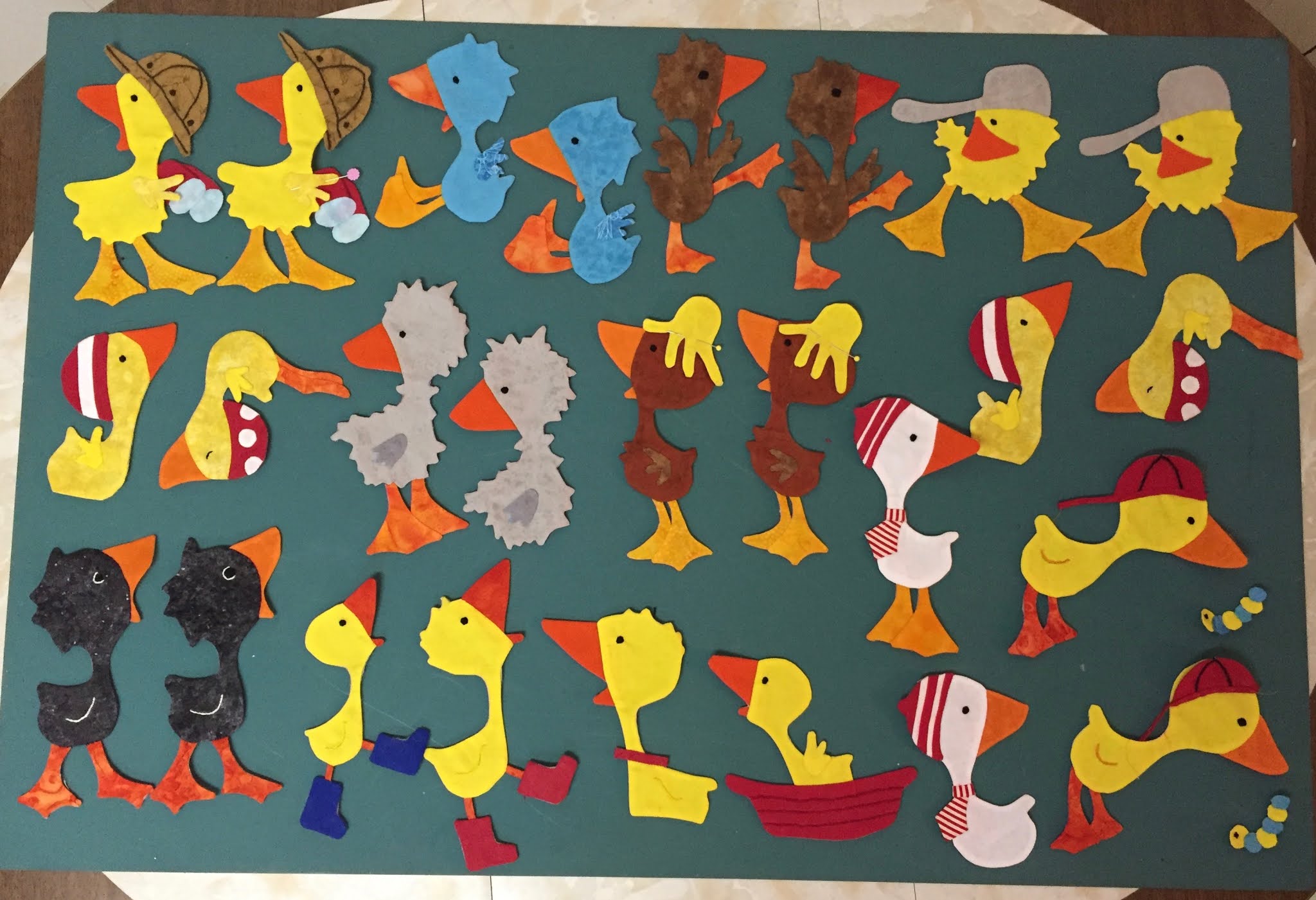
I have almost finished all the characters for my Olivier Dunrea quilt. I'm just trying to figure out the best way to create the red stripes for Gideon's friend Otto (the octopus). Should I sew them, embroider them or invest in some fabric pens and colour them in? It will get figured out eventually. After a short reading break I plan to start on the rest of the little animals and plants. Sometimes I'm overwhelmed by what I've taken on, but then I remember that it all gets accomplished bit by bit. 


Aside from sewing, I worked on a book review for Naomi Klein and Rebecca Stefoff's book about climate change. It was challenging. I haven't taken that many notes while reading since I was at university. At the same time as I was reading and writing about it, I was reading Silent Spring by Rachel Carson. I also had Crossing Home Ground by David Pitt-Brooke, a title about habitat loss in my part of the world, on the go. It was all pretty grim.

Titles with a 🍁 indicate this is a Canadian Author and or Illustrator. 

Clicking on the title will take you to the Goodreads page of the book. 

BLOG POSTS LAST WEEK

How to Change Everything: The Young Human's Guide to Protecting the Planet and Each Other by by Naomi Klein & Rebecca Stefoff

#IReadCanadian: Books For All Ages

PICTURE BOOKS

4 stars
  
In My Anaana's Amautik
by Nadia Sammurtok & Lenny Lishchenko (Illustrator) 🍁

This is told from the perspective of a child being carried in an amautik - a pouch at the back of their Inuit mother's parka. Connections are made from the experience of being inside it to the rest of their arctic environment. The beauty of the land is captured in both Sammurtok's words and Lishchenko's illustrations.

POETRY 

4 stars

Our Corner Store
by Robert Heidbreder & Chelsea O'Byrne (Illustrations) 🍁

This sequel to Rooster Summer, is another novel in verse based on the memories of the author's childhood. It tells the story of two siblings, their friends, and their relationship to the owners of the corner store in their neighbourhood. The rollicking poetry is full of the energy of childhood. Heidbreder captures the sounds and smells of a time gone by in these delightful poems. O'Byrne's illustrations add to these memories. The collection reminded me of being sent to the store to pick up grocery orders my mother phoned in. Imagine sending a four year old a block and a half to the store now!

NON FICTION


I was nine in 1962 when this beautifully written book was published. Rachel Carson sounded the alarm about the devastation wrought by our attempt to control insects, weeds and other 'pests' by spraying toxic chemicals  I might have read this book in my youth, but if I did, I have forgotten it. I do remember a conversation with my father about the local consequences of spraying DDT. Here in our orchard/vineyard community in the Okanagan Valley, not only were the birds silenced, the mouse population went out of control and began to destroy fruit trees. The local rattlesnakes, their primary predators, had also been decimated by the poison.
Carson shows us the consequences of an extractivist worldview where humans see themselves as masters of the planet. She takes the reader through episode after episode of the destruction of the natural world and shows how we harm ourselves as a consequence. Most profoundly, we see that any positive results are temporary at best. Because of the chemical's wholesale wreaking of armageddon to ecosystems, they ended up making matters worse. She finishes the book with alternative, and much more cost effective and efficient ways of dealing with the pests in our lives. These are the methods we use in our local garden today.
I couldn't help but make a connection between the subterfuge of chemical companies then and similar tactics used by the chemical & fossil fuel industries today.


In search of pristine bunchgrass meadows, Pitt-Brooke set off to walk from Kereomas and Osoyoos in the southernmost part of the Okanagan Valley here in British Columbia, to Williams Lake in the Cariboo region of the province. Along the way he reminisces about his past and ruminates on the history of the different areas. 
 
DISCWORLD NOVELS

5 stars

The Amazing Maurice and His Educated Rodents

I've read this one before and am happy to have read it again in the context of the rest of the series. It's one of a handful of best novels from the Discworld collection. It's also one of the few suitable for younger readers (aged 10 and older.) It's a twisted fairytale based on the Pied Piper of Hamelin theme. A group of rats, having eaten some kind of strange food, become sentient and start to talk and think like humans. Maurice, a cat, ended up in the same situation after eating one of them. They band together with Keith, a young flute player. The group travel from community to community fleecing the inhabitants after tricking them into believing they have a rat infestation and being saved by Keith, their Pied Piper.
Things change when they arrive in a new town where the village Rat Catchers have their own nefarious swindle going on. As nasty as they are, they are not the worse surprise for the group. A manipulative evil being gets inside and controls the mind of anyone who gets close to it.
This book is hilarious, heartwarming, and gruesome.

CURRENTLY 

The Pratchett novel I'm listening to is Night Watch. Otherwise, I am between books right. 

UP NEXT

I plan to read Twins by Varian Johnson, When You Trap A Tiger by Tae Keller and Measuring Up by Lily La Motte. I'll be reading and writing a review for a Netgalley title, The Incredible Nellie Bly by Luciana Cimino. I'm hoping to find time to start reading The Sixth Extinction by Elizabeth Kolbert. I've got an audiobook, On Fire: The Burning Case for A Green New Deal by Naomi Klein checked, but I'm not sure I can handle reading it in tandem with Elizabeth Kolbert's book.

PROGRESS ON MY READING GOALS 

#MustReadIn2021 5/25 

#MustReadNFIn2021 2/12 

#MustReadPBIn2021 13/100

Books by Canadian Indigenous Authors: 7/25 

Books by Canadian Authors: 19/100

Canada Reads 2021 1/5

Discworld Series 28/41 

Goodreads Reading Challenge: 70/333 

How to Change Everything: The Young Human's Guide to Protecting the Planet and Each Other by by Naomi Klein & Rebecca Stefoff

Thanks to NetGalley for the opportunity to read and review this book. It will be released February 23, 2021, by Puffin Canada.

"As the impacts of climate change get worse and worse, change for the better means much more than trying to keep temperatures down. It means rebuilding society to not just stop climate change, but to achieve climate justice. It means changing the way we live so we heal the planet and secure a fair and livable future for all people, with no one and no community left behind."

How to Change Everything is a compendium of much of Klein's work, organized and assembled in a format for young readers. It's an easy and compelling read that's an ideal overview of climate change for all of us. I'm impressed by how thorough and thoughtful it is. The authors manage to introduce important vocabulary and integrate economic and environmental realities into a coherent narrative. 

The publication includes many different nonfiction text features. The layout includes highlighted sections that tell the stories of different climate activists. Readers will learn about people like Esperanza Martinez, Aldo Leopold, Rachel Carson, Jackson Hinkle, Celeste Tinajereo, and more. There are photographs, labeled diagrams, and flowcharts. The back matter includes a public letter signed by important authors and individuals in the environmental movement. They are requesting the preservation of ecosystems to remove large amounts of carbon from the atmosphere. There is also a bibliography titled, Find Out More, and a Notes section that reference Klein's original work. I wish it had an index and glossary. Perhaps the final copy will. The information is organized into three sections. The first one looks at the world as it now is. The second looks at the history of how we got here and the the third examines strategies for where we go now. 

In section one, the authors examine where we now are with regards to climate change. They write about Greta Thunberg and the student strike for climate change. Examples are provided that explore what climate change looks like. They write in depth about the tragedy of New Orleans before and after the hurricane. We are shown how neoliberal/free market policies failed the city in numerous ways. First it failed to ensure protection for the citizens in the event of such a catastrophe. Second, the for profit recovery efforts not only wasted money, but also made it impossible for people to be able to afford to return to their homes. This is Disaster Capitalism in action: "When the rich and powerful take advantage of painful shocks to widen existing inequalities instead of correcting them." It resulted in the decimation of features considered necessary for the public good. Even the education system was privatized in the rebuilding of New Orleans. 

The authors present alternatives to this kind of disaster response with the proviso that "recovery and green projects must lift up communities, not just corporations." 

Aspects of different sacrifice zones and the role of environmental racism are revealed. We are shown how land and people are sacrificed because of our dependence on fossil fuels. Indigenous and poor people are generally the victims of these kinds of climate cruelty. Ultimately, "people who pollute the least end up suffering the most." We see this climate injustice manifest in 'white power eco-fascism' and the attempt to keep climate refugees out of the country. 

Climate change is clearly defined. It includes both the science underlying it, and the many ramifications of it. The authors explain the terms carbon budget: the amount of carbon we can add to the environment before we have a total disaster on our hands, and climate debt: the amount owed by developed countries to developing ones because of the damage caused by their disproportionately large contributions to climate change. Historically western nations have used most of the budget: 1/5th of the population has used up 2/3rds of the CO2 emissions. 

The next section looks at the history of fossil fuel development, the beginnings of modern capitalism, and the emergence of the environmental movement. The development of coal powered steam engines resulted in fossil fuel based manufacturing. This in turn lead to the onset of consumerism and modern capitalism. The authors show how industrialization goes hand in glove with a significant alteration in our relationship to the earth. Rather than being caretakers, extractivism became the new normal. Europeans saw themselves as masters of everything on the planet. It was theirs to use and colonize. Early 'sacrifice zones' included the coal miners who ended up with black lung, polluted water, slavery and the killer smogs in London. 

The environmental movement arose in response to the decimation of the planet from industrialization. It began with 19th and 20th century conservatism. Upper class individuals and organizations worked to save wild places. It's because of them we have national parks here in North America. Aldo Leopold, often referred to as the father of wildlife ecology and Rachel Carson, the mother of the environmental movement, provided alternatives to the extractivist philosophy and a way to live as caretakers of the earth. Carson is especially known for highlighting the disaster of chemical spraying. The legal system was first used in 1948 in the USA to pass a law to control water pollution. Other laws followed to protect the air, wilderness and rivers. Some legislation focused on protecting human health and others to preserve the natural world. The Superfund act in 1980 was passed to force industry clean up and or pay for cleaning up their messes. (I wish it had worked. Here in BC in 2021, we are left cleaning up the toxic messes from mining operations. The oil/tar sands in Alberta are a whole other debacle.)

Carbon emissions continued to increase, but 1988 was a pivotal year. Industry scientists had been forecasting climate change since the late 1970's. It was a recognized fact. Everyone was onside and aware of the need for change. All political parties accepted it. At the World Conference on Changing Atmosphere in Toronto, Canada, world leaders agreed to reduce their emissions. 

And yet, it all fell apart. 

The authors present a couple of reasons. One, the human nature theory presumes that humans "are not capable of sacrificing present convenience to forestall a penalty imposed on future generations." The other is the rise of neoliberal/free market ideology. This led to a decrease in regulation and a rise in profit and economic growth no matter the waste or cost. Out of this emerged a deliberate system of denial and lies. Even when corporations seemed to be onside, they were mostly engaged in greenwashing: attempts to encourage surface level changes that made no significant difference in carbon emissions. 

Today we are at a place where we have to cut our global emissions in half by 2030, and eliminate them by 2050 if we are to avoid catastrophic climate disaster. 

The words of Brad Werner, a systems theorist, provide hope. He asserted that "the balance between earth's resources and ecosystems on one hand and human consumption on the other is becoming unstable." Yet he goes on to affirm the role of resistance to change this. Examples of social movements and laws are provided to show what people have done to protect their homes and the planet. 

The final section deals with strategies for dealing with where now are. A number of ideas are presented and evaluated. Some like Carbon Capture and Geoengineering are not only risky, they don't address the increase in emissions. Other ideas like Planting Trees and investing in Alternative Energy by way of solar and wind power are looked at positively. 

The authors continue on to talk about a Green New Deal. They begin by explaining the successes and problems of the original New Deal, and then proceed to outline a format for a new one. The three main principles of it are as follows:

1. Stop new fossil fuel endeavours

2. Slow down and end existing production 

3. Increase the use of renewable energy

They go on to show how hundreds of millions of new jobs would be created from the third principle. 

In the adoption of a Green New Deal, "We must make sure that no one is excluded or left behind because they lack political power. We must recognize that when it comes to climate change, business interests are not the same as the people's and the planet. We must not let corporate and business interests make all the decisions, although we must also work to sustain our economies, including businesses that want to be part of the solution. We must seek deep change based in shared, democratic decision-making, with all of our voices heard."

Puerto Rico and Greensburg Kansas are presented as communities who were able to stave off disaster capitalism. They managed to reinvent themselves focusing on community based, sustainable solutions like those proposed in the Green New Deal. 

The last part of the book includes a "toolkit for young activists." Numerous strategies for how individuals can become activists in big ways and small are highlighted. Young activists who have been involved in making change are introduced. Some are involved changing their schools and community. Others are working at a more global level. Felix Finkbeiner in Germany, working for larger change, initiated the planting of over a million trees. Autumn Peltier, an Indigenous Canadian Water Warrior, told the United Nations, "We can't eat money or drink oil." 

Ultimately, the authors of this book assert that while we might not be able to change the past, we can and must change the future. It's imperative to start NOW! 

Purchase one copy for yourself and extra copies for the young activists in your life.