#IMWAYR March 1, 2021

Hello out there. It's #IMWAYR time again, when readers share what they have been reading and find out what others have been up to in the past week. Kathryn hosts the adult version of this meme at Book Date. Jen at Teach Mentor Texts and Kellee and Ricki at Unleashing Readers host the kidlit rendition. Whatever you are looking forward to in your next great read, these are fabulous places to start your search.

I am still walking at least six days a week. I'm now up to 8.5 kilometers. I plot out routes to see different parts of the community and country around our small town. I plug an audiobook into my ears and head out. I feel disgustingly healthy, but mostly I am full of joy. In rediscovering the landscape of my youth I'm connected to the planet in a way I never was living in the city. I might even learn to love the prickly pear cactus. 

Titles with a ๐Ÿ indicate this is a Canadian Author and or Illustrator. 

Clicking on the title will take you to the Goodreads page of the book. 

BLOG POSTS LAST WEEK

Last week I had hoped to read and review a Netgalley title, The Incredible Nellie Bly a graphic novel by Luciana Cimino. It was downloaded onto my device and I was looking forward to it. Unfortunately, the text was painfully blurry at best, and mostly impossible to read.

PICTURE BOOKS

4 stars

Find Fergus
by Mike Boldt ๐Ÿ

This was lots of fun. I really wish my grandkids were here for me to read it with them. Fergus is a bear who at first is not very good at playing hide and seek. With a little help from the author and reader he gradually improves. Eventually Fergus ends up challenging us to find a list of things hidden in the pages of the book.


Picture books in rhyme are difficult to pull off. This one works - mostly. The structure of the first part is different from the rest and it threw me off a bit. The second time round went better. I do love the idea that when we are loved, that love is with us all the time no matter what we do and where we go. The neon bright illustrations show happy children in diverse families.


To everyone who wrote about this book, I thank you. Gwendolyn Brooks' biography is told in poetry and prose. Suzanne Slade's words are interspersed with Brooks'. Not only are they a joy to read, Cozbi A. Cabrera's illustrations are just stunning.
Reading this makes me want to read more of Brooks' poetry.

GRAPHIC NOVELS


This is delightful. When Francine and Maureen start grade six, they end up being in separate classes for the first time in their lives. As the two of them become interested in different things, tension between the two of them arises. It gets even worse when both of them end up running for class president.
I like a lot about this. I like the diverse group of friends. While the twins are Black, it's their twinness that drives the story here. I appreciate that a large component of what drives the problems between the two girls has to do with secrets the family was keeping from each other. Hopefully they all learn to be more honest with each other. This would make a great series. 


Cici, young girl from Taiwan, has just moved with her parents to Seattle, Washington. While Cici makes new friends, she also has to deal with all kinds of microaggressions. She misses her A-mรก (grandmother) terribly and comes up with a plan to win a cooking contest so she can afford to bring her to be with them on her 70th birthday. She makes a new friend through the contest and learns a lot from her. I love that she goes to the library for help with cooking potatoes and the librarian sends her home with Julia Child. (We have that book here. Potato pancakes will be on the menu this week I think.) If like me you want to try out Cici's oily rice, you can find the recipe here: https://lilylamotte.com/

NOVELS


Stories are powerful. Terry Pratchett wrote, "People think that stories are shaped by people. In fact, it's the other way around." This book is about the stories that make us who we are. It's about the stories that don't get told and the stories that do. It's how the stories of our ancestors and countries are integrated into our modern lives.
Two half Korean girls and their Mother return to the small town in Washington State where their Halmoni lives. One one of the daughters, Lily, negotiates with a giant tiger that only she can see. She bargains with it to heal Halmoni, who is dying, but tigers are tricksters who rarely give you what you think you want. In the end, they get what they need.

4 stars

Binti
by Nnedi Okorafor & Robin Miles (Narrator)

The only problem with this book is that it's a novela and too short. I feel like I barely got to know Binti and it was over.
Binti, a gifted mathematician, leaves her desert home and people to go to Oomza University on another planet. On the way the ship is attacked by the Meduse, an alien race at war with these people. Everyone except Binti is killed, but she is saved by her edan, a piece of ancient technology she had brought with her from Earth. It enables her to communicate with her captors and she ends up brokering a tentative peace between the two groups. In the process, she is transformed. If the next one had only been available I would have started it right away. I immediately put it on hold. 

DISCWORLD NOVELS


This is my second time reading this. I liked it even more than the first time round. I find this is true with all of Pratchett's novels. The first time I focus on the story arc. The second time I revel in the details and humour.
On the eve of his first child's birth, Sir Samuel Vimes, commander of the Ankh-Morpork City Watch, gets caught up in a magical storm and ends up travelling back in time. He brings with him Carcer Dun, a psychopathic serial killer. Ankh-Morpork is in the middle of a revolution and both men get caught up in it. While Vimes is trying to maintain peace, Carcer Dun joins forces with the revolutionaries.
There is a saying by Jean-Baptiste Alphonse Karr, "The More Things Change, The More They Remain The Same." That's the big idea behind this book, except that through it all, Pratchett manages to make us care about all the individuals caught up in the foibles of history, however flawed they are. (Except for Carcer Dun) The more I read about Sam Vimes, the more I come to adore him - not quite, but almost as much as Tiffany Aching.

I very nearly started this all over again as soon as I finished it. I think it's the fourth time I've read it. The Tiffany Aching series spurred me into reading more of Pratchett's Discworld collection. This one is appropriate for readers from grade 4 up.
While a Feegle is introduced in one of the earlier novels, in this one, we get to really know the 'Wee Free Men.' They are Pictsies, a kind of Gaelic fairy folk. Don't get them confused with pixies or other fairies if you want to keep your teeth. This boisterous bunch of six inch, blue skinned, kilted little people love to steal, drink, fight, and tell lies. This group, the Nac Mac Feegles, make their home in a mound on the Chalk and consider Tiffany to be the witch of the land and their big wee hag.
Tiffany, only nine, manages to rescue Wentworth, her little brother, and Roland, the Baron’s son, from the Queen of the Elves. It is a gripping adventure wherein a talking toad, the Nac Mac Feegles and an iron frying pan play important roles in the rescue.

Three years after The Wee Free Men, Tiffany sets off to be an apprentice to the older witch, Miss Level. In this coming of age tale she starts to come to grips with who she will become. She struggles to fit in with the coven of younger witches led by the bossy, bullying, leadership of Annagramma Hawkin, and ends being laughed at. Tiffany's secret trick of stepping out of her body has attracted the attention of a hiver. It manages to take control of her body and abuses her power.
With the help of the Nac Mac Feegles and Miss Level, they manage to drive the Hiver off. Then Tiffany and Granny Weatherwax work together to put an end to it. The ending is not at all what you might expect.
When the hiver has control of Tiffany, she does the kinds of things that she might think of doing, but would never actually do. When she's finally dealt with it, she takes responsibility for what happened under its control.

As an older reader reading these books, it's like watching a grandchild grow up. It took great restraint not to just start the next one in the miniseries. 

CURRENTLY 

I'm reading a netgalley title, Call Me Indian: From the Trauma of Residential School to Becoming the NHL's First Treaty Indigenous Player by Fred Sasakamoose. I've started Aggie Morton, Mystery Queen: Peril at Owl Park by Marthe Jocelyn. The Pratchett novel I'm listening to is Going Postal. I'm also listening to Hench by Natalie Zina Walschots.

UP NEXT

My partner took my copy of The Sixth Extinction by Elizabeth Kolbert to read last week so I'll start it when he's done with it. I hope to get to Beetle & the Hollowbones by Aliza Layne and finish up the picture books from the library. I now have a lot of audiobooks ready to listen to. The Project by Courtney Summers is next in the queue. 

PROGRESS ON MY READING GOALS 

#MustReadIn2021 5/25 

#MustReadNFIn2021 2/12 

#MustReadPBIn2021 14/100

Books by Canadian Indigenous Authors: 7/25 one in progress

Books by Canadian Authors: 19/100

Canada Reads 2021 1/5 one in progress

Discworld Series 31/41 

Goodreads Reading Challenge: 80/333 

#IMWAYR February 22, 2021

 Hello out there. It's #IMWAYR time again, when readers share what they have been reading and find out what others have been up to in the past week. Kathryn hosts the adult version of this meme at Book Date. Jen at Teach Mentor Texts and Kellee and Ricki at Unleashing Readers host the kidlit rendition. Whatever you are looking forward to in your next great read, these are fabulous places to start your search.

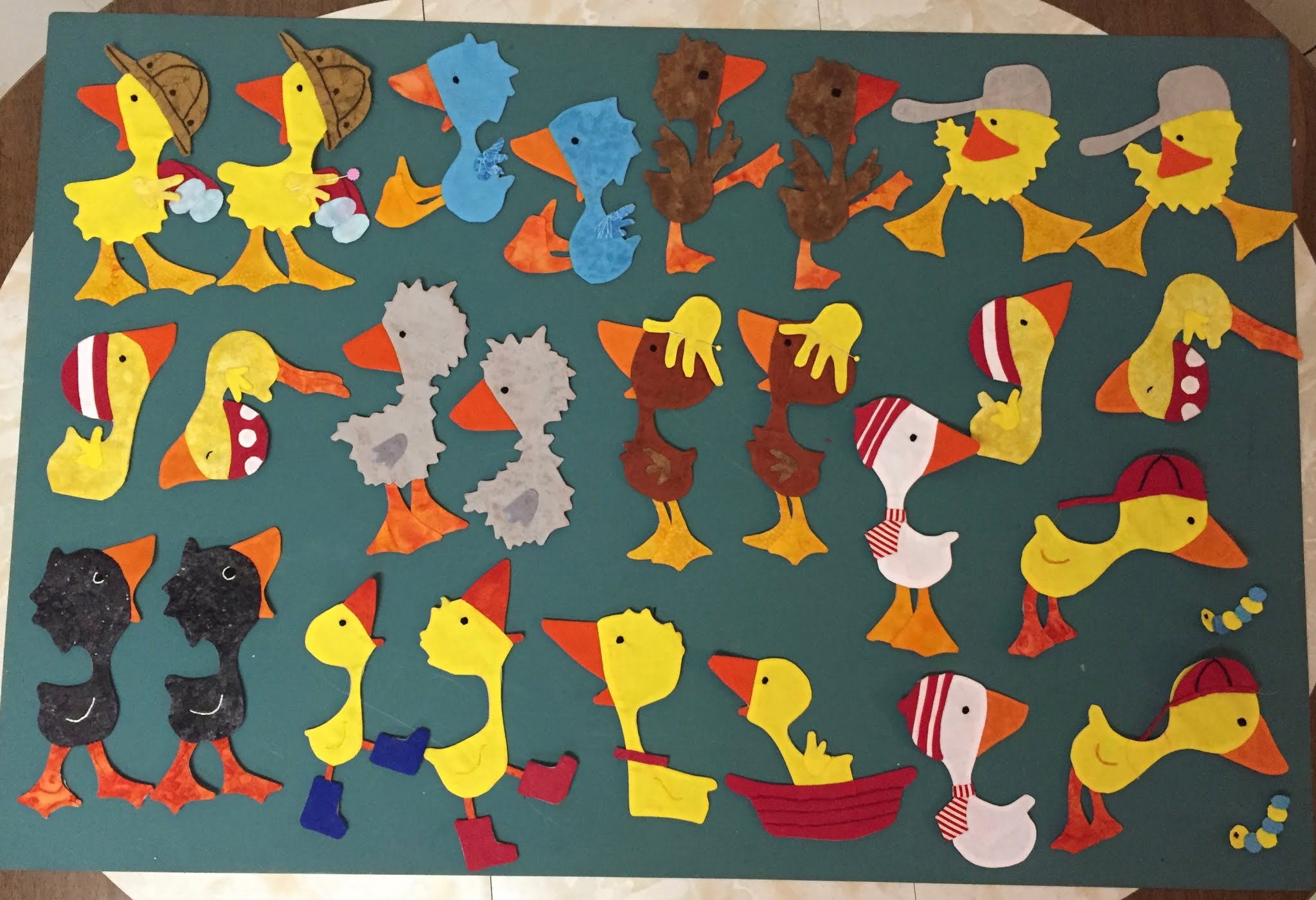
I have almost finished all the characters for my Olivier Dunrea quilt. I'm just trying to figure out the best way to create the red stripes for Gideon's friend Otto (the octopus). Should I sew them, embroider them or invest in some fabric pens and colour them in? It will get figured out eventually. After a short reading break I plan to start on the rest of the little animals and plants. Sometimes I'm overwhelmed by what I've taken on, but then I remember that it all gets accomplished bit by bit. 


Aside from sewing, I worked on a book review for Naomi Klein and Rebecca Stefoff's book about climate change. It was challenging. I haven't taken that many notes while reading since I was at university. At the same time as I was reading and writing about it, I was reading Silent Spring by Rachel Carson. I also had Crossing Home Ground by David Pitt-Brooke, a title about habitat loss in my part of the world, on the go. It was all pretty grim.

Titles with a ๐Ÿ indicate this is a Canadian Author and or Illustrator. 

Clicking on the title will take you to the Goodreads page of the book. 

BLOG POSTS LAST WEEK

How to Change Everything: The Young Human's Guide to Protecting the Planet and Each Other by by Naomi Klein & Rebecca Stefoff

#IReadCanadian: Books For All Ages

PICTURE BOOKS

4 stars
  
In My Anaana's Amautik
by Nadia Sammurtok & Lenny Lishchenko (Illustrator) ๐Ÿ

This is told from the perspective of a child being carried in an amautik - a pouch at the back of their Inuit mother's parka. Connections are made from the experience of being inside it to the rest of their arctic environment. The beauty of the land is captured in both Sammurtok's words and Lishchenko's illustrations.

POETRY 

4 stars

Our Corner Store
by Robert Heidbreder & Chelsea O'Byrne (Illustrations) ๐Ÿ

This sequel to Rooster Summer, is another novel in verse based on the memories of the author's childhood. It tells the story of two siblings, their friends, and their relationship to the owners of the corner store in their neighbourhood. The rollicking poetry is full of the energy of childhood. Heidbreder captures the sounds and smells of a time gone by in these delightful poems. O'Byrne's illustrations add to these memories. The collection reminded me of being sent to the store to pick up grocery orders my mother phoned in. Imagine sending a four year old a block and a half to the store now!

NON FICTION


I was nine in 1962 when this beautifully written book was published. Rachel Carson sounded the alarm about the devastation wrought by our attempt to control insects, weeds and other 'pests' by spraying toxic chemicals  I might have read this book in my youth, but if I did, I have forgotten it. I do remember a conversation with my father about the local consequences of spraying DDT. Here in our orchard/vineyard community in the Okanagan Valley, not only were the birds silenced, the mouse population went out of control and began to destroy fruit trees. The local rattlesnakes, their primary predators, had also been decimated by the poison.
Carson shows us the consequences of an extractivist worldview where humans see themselves as masters of the planet. She takes the reader through episode after episode of the destruction of the natural world and shows how we harm ourselves as a consequence. Most profoundly, we see that any positive results are temporary at best. Because of the chemical's wholesale wreaking of armageddon to ecosystems, they ended up making matters worse. She finishes the book with alternative, and much more cost effective and efficient ways of dealing with the pests in our lives. These are the methods we use in our local garden today.
I couldn't help but make a connection between the subterfuge of chemical companies then and similar tactics used by the chemical & fossil fuel industries today.


In search of pristine bunchgrass meadows, Pitt-Brooke set off to walk from Kereomas and Osoyoos in the southernmost part of the Okanagan Valley here in British Columbia, to Williams Lake in the Cariboo region of the province. Along the way he reminisces about his past and ruminates on the history of the different areas. 
 
DISCWORLD NOVELS

5 stars

The Amazing Maurice and His Educated Rodents

I've read this one before and am happy to have read it again in the context of the rest of the series. It's one of a handful of best novels from the Discworld collection. It's also one of the few suitable for younger readers (aged 10 and older.) It's a twisted fairytale based on the Pied Piper of Hamelin theme. A group of rats, having eaten some kind of strange food, become sentient and start to talk and think like humans. Maurice, a cat, ended up in the same situation after eating one of them. They band together with Keith, a young flute player. The group travel from community to community fleecing the inhabitants after tricking them into believing they have a rat infestation and being saved by Keith, their Pied Piper.
Things change when they arrive in a new town where the village Rat Catchers have their own nefarious swindle going on. As nasty as they are, they are not the worse surprise for the group. A manipulative evil being gets inside and controls the mind of anyone who gets close to it.
This book is hilarious, heartwarming, and gruesome.

CURRENTLY 

The Pratchett novel I'm listening to is Night Watch. Otherwise, I am between books right. 

UP NEXT

I plan to read Twins by Varian Johnson, When You Trap A Tiger by Tae Keller and Measuring Up by Lily La Motte. I'll be reading and writing a review for a Netgalley title, The Incredible Nellie Bly by Luciana Cimino. I'm hoping to find time to start reading The Sixth Extinction by Elizabeth Kolbert. I've got an audiobook, On Fire: The Burning Case for A Green New Deal by Naomi Klein checked, but I'm not sure I can handle reading it in tandem with Elizabeth Kolbert's book.

PROGRESS ON MY READING GOALS 

#MustReadIn2021 5/25 

#MustReadNFIn2021 2/12 

#MustReadPBIn2021 13/100

Books by Canadian Indigenous Authors: 7/25 

Books by Canadian Authors: 19/100

Canada Reads 2021 1/5

Discworld Series 28/41 

Goodreads Reading Challenge: 70/333 

How to Change Everything: The Young Human's Guide to Protecting the Planet and Each Other by by Naomi Klein & Rebecca Stefoff

Thanks to NetGalley for the opportunity to read and review this book. It will be released February 23, 2021, by Puffin Canada.

"As the impacts of climate change get worse and worse, change for the better means much more than trying to keep temperatures down. It means rebuilding society to not just stop climate change, but to achieve climate justice. It means changing the way we live so we heal the planet and secure a fair and livable future for all people, with no one and no community left behind."

How to Change Everything is a compendium of much of Klein's work, organized and assembled in a format for young readers. It's an easy and compelling read that's an ideal overview of climate change for all of us. I'm impressed by how thorough and thoughtful it is. The authors manage to introduce important vocabulary and integrate economic and environmental realities into a coherent narrative. 

The publication includes many different nonfiction text features. The layout includes highlighted sections that tell the stories of different climate activists. Readers will learn about people like Esperanza Martinez, Aldo Leopold, Rachel Carson, Jackson Hinkle, Celeste Tinajereo, and more. There are photographs, labeled diagrams, and flowcharts. The back matter includes a public letter signed by important authors and individuals in the environmental movement. They are requesting the preservation of ecosystems to remove large amounts of carbon from the atmosphere. There is also a bibliography titled, Find Out More, and a Notes section that reference Klein's original work. I wish it had an index and glossary. Perhaps the final copy will. The information is organized into three sections. The first one looks at the world as it now is. The second looks at the history of how we got here and the the third examines strategies for where we go now. 

In section one, the authors examine where we now are with regards to climate change. They write about Greta Thunberg and the student strike for climate change. Examples are provided that explore what climate change looks like. They write in depth about the tragedy of New Orleans before and after the hurricane. We are shown how neoliberal/free market policies failed the city in numerous ways. First it failed to ensure protection for the citizens in the event of such a catastrophe. Second, the for profit recovery efforts not only wasted money, but also made it impossible for people to be able to afford to return to their homes. This is Disaster Capitalism in action: "When the rich and powerful take advantage of painful shocks to widen existing inequalities instead of correcting them." It resulted in the decimation of features considered necessary for the public good. Even the education system was privatized in the rebuilding of New Orleans. 

The authors present alternatives to this kind of disaster response with the proviso that "recovery and green projects must lift up communities, not just corporations." 

Aspects of different sacrifice zones and the role of environmental racism are revealed. We are shown how land and people are sacrificed because of our dependence on fossil fuels. Indigenous and poor people are generally the victims of these kinds of climate cruelty. Ultimately, "people who pollute the least end up suffering the most." We see this climate injustice manifest in 'white power eco-fascism' and the attempt to keep climate refugees out of the country. 

Climate change is clearly defined. It includes both the science underlying it, and the many ramifications of it. The authors explain the terms carbon budget: the amount of carbon we can add to the environment before we have a total disaster on our hands, and climate debt: the amount owed by developed countries to developing ones because of the damage caused by their disproportionately large contributions to climate change. Historically western nations have used most of the budget: 1/5th of the population has used up 2/3rds of the CO2 emissions. 

The next section looks at the history of fossil fuel development, the beginnings of modern capitalism, and the emergence of the environmental movement. The development of coal powered steam engines resulted in fossil fuel based manufacturing. This in turn lead to the onset of consumerism and modern capitalism. The authors show how industrialization goes hand in glove with a significant alteration in our relationship to the earth. Rather than being caretakers, extractivism became the new normal. Europeans saw themselves as masters of everything on the planet. It was theirs to use and colonize. Early 'sacrifice zones' included the coal miners who ended up with black lung, polluted water, slavery and the killer smogs in London. 

The environmental movement arose in response to the decimation of the planet from industrialization. It began with 19th and 20th century conservatism. Upper class individuals and organizations worked to save wild places. It's because of them we have national parks here in North America. Aldo Leopold, often referred to as the father of wildlife ecology and Rachel Carson, the mother of the environmental movement, provided alternatives to the extractivist philosophy and a way to live as caretakers of the earth. Carson is especially known for highlighting the disaster of chemical spraying. The legal system was first used in 1948 in the USA to pass a law to control water pollution. Other laws followed to protect the air, wilderness and rivers. Some legislation focused on protecting human health and others to preserve the natural world. The Superfund act in 1980 was passed to force industry clean up and or pay for cleaning up their messes. (I wish it had worked. Here in BC in 2021, we are left cleaning up the toxic messes from mining operations. The oil/tar sands in Alberta are a whole other debacle.)

Carbon emissions continued to increase, but 1988 was a pivotal year. Industry scientists had been forecasting climate change since the late 1970's. It was a recognized fact. Everyone was onside and aware of the need for change. All political parties accepted it. At the World Conference on Changing Atmosphere in Toronto, Canada, world leaders agreed to reduce their emissions. 

And yet, it all fell apart. 

The authors present a couple of reasons. One, the human nature theory presumes that humans "are not capable of sacrificing present convenience to forestall a penalty imposed on future generations." The other is the rise of neoliberal/free market ideology. This led to a decrease in regulation and a rise in profit and economic growth no matter the waste or cost. Out of this emerged a deliberate system of denial and lies. Even when corporations seemed to be onside, they were mostly engaged in greenwashing: attempts to encourage surface level changes that made no significant difference in carbon emissions. 

Today we are at a place where we have to cut our global emissions in half by 2030, and eliminate them by 2050 if we are to avoid catastrophic climate disaster. 

The words of Brad Werner, a systems theorist, provide hope. He asserted that "the balance between earth's resources and ecosystems on one hand and human consumption on the other is becoming unstable." Yet he goes on to affirm the role of resistance to change this. Examples of social movements and laws are provided to show what people have done to protect their homes and the planet. 

The final section deals with strategies for dealing with where now are. A number of ideas are presented and evaluated. Some like Carbon Capture and Geoengineering are not only risky, they don't address the increase in emissions. Other ideas like Planting Trees and investing in Alternative Energy by way of solar and wind power are looked at positively. 

The authors continue on to talk about a Green New Deal. They begin by explaining the successes and problems of the original New Deal, and then proceed to outline a format for a new one. The three main principles of it are as follows:

1. Stop new fossil fuel endeavours

2. Slow down and end existing production 

3. Increase the use of renewable energy

They go on to show how hundreds of millions of new jobs would be created from the third principle. 

In the adoption of a Green New Deal, "We must make sure that no one is excluded or left behind because they lack political power. We must recognize that when it comes to climate change, business interests are not the same as the people's and the planet. We must not let corporate and business interests make all the decisions, although we must also work to sustain our economies, including businesses that want to be part of the solution. We must seek deep change based in shared, democratic decision-making, with all of our voices heard."

Puerto Rico and Greensburg Kansas are presented as communities who were able to stave off disaster capitalism. They managed to reinvent themselves focusing on community based, sustainable solutions like those proposed in the Green New Deal. 

The last part of the book includes a "toolkit for young activists." Numerous strategies for how individuals can become activists in big ways and small are highlighted. Young activists who have been involved in making change are introduced. Some are involved changing their schools and community. Others are working at a more global level. Felix Finkbeiner in Germany, working for larger change, initiated the planting of over a million trees. Autumn Peltier, an Indigenous Canadian Water Warrior, told the United Nations, "We can't eat money or drink oil." 

Ultimately, the authors of this book assert that while we might not be able to change the past, we can and must change the future. It's imperative to start NOW! 

Purchase one copy for yourself and extra copies for the young activists in your life.

#IReadCanadian: Books For All Ages

I READ CANADIAN DAY, February 17, 2021, is a national day of celebration of Canadian books for young people (and everyone). This is a day dedicated to ‘reading Canadian.’ The purpose is to raise awareness of Canadian books and celebrate the richness, diversity and breadth of Canadian literature. We have a wealth of talent in our country!

If you are wondering what to read, I've compiled some lists of the best Canadian literature I've read in the past few years. Some are recent publications and others have been around for ages. There are #OwnVoices titles from the many groups of people in Canada. Many are Indigenous authors. Most are fiction, but there are nonfiction, poetry and graphic novels as well. There are books for readers of all ages on these lists. 

Clicking on the heading for each category will take you to a page where you can read more about the titles in the picture. 

PICTURE BOOKS

CHAPTER BOOKS FOR YOUNGER READERS

NONFICTION FOR YOUNGER READERS

NOVELS FOR TWEENS AND TEENS

YOUNG ADULT NOVELS

NONFICTION FOR YA, TWEENS AND TEENS

FICTION FOR ADULTS


ADULT NONFICTION

#IMWAYR February 15, 2021

Hello out there. It's #IMWAYR time again, when readers share what they have been reading and find out what others have been up to in the past week. Kathryn hosts the adult version of this meme at Book Date. Jen at Teach Mentor Texts and Kellee and Ricki at Unleashing Readers host the kidlit rendition. Whatever you are looking forward to in your next great read, these are fabulous places to start your search.

I Read Canadian Day is this Wednesday, February 17th!

Last week I finished a collection of blog posts highlighting some of the best Canadian literature I've read in the past few years. You don't have to be Canadian to help us celebrate! I'm hoping that everyone will find something to read on those lists.  


It was cold last week. I know our -10 C and -11 C isn't a big deal for many parts of the continent, but with that north wind, it was plenty chilly for me. I borrowed my partner's balaclava and planned out my daily walking routes so that I would walk as little as possible into the wind. It warmed up to -3 on Sunday and is supposed to continue the warming trend into next week. We've only had skiffs of snow so far with more light flurries to come.  

Titles with a ๐Ÿ indicate this is a Canadian Author and or Illustrator. 

5 stars

To the Sea by Cale Atkinson
 ๐Ÿ
This is a gorgeous story of friendship.
Tim feels invisible until he meets Sam, a stranded whale. No one else noticed him. Tim felt that no one noticed him either. Both of them felt better knowing they weren't invisible. Tim goes out of his way and achieves the impossible to get his new friend back to the sea. It looks like he might just make a new land based friend at the end of it.
Orange text is set against a palette of bright orange, dark green and blue stunning illustrations.

As a quilter, I am predisposed to love this book. I do. It's the story of a young girl who feels like an outsider in her new school until her mother and teacher work together to create an inclusion quilt. Each student in her class creates a template with their name written in Arabic. Adults take these and turn them into a paper quilt that is presented on a bulletin board outside the classroom.
I adored the quilt Kanzi's teita (grandmother) in Egypt made. We creators of fabric art, no matter our skills, are connected around the world through our passion for creating things of beauty out of bits of fabric.


Let me begin by saying that this isn't a European style traditional picture book. It tells the story of a young Inuit boy and his uncle who are walking along the beach to the family's annual camp. On the way they meet up with some of his cousins who are fishing through the ice. Along the way the boy and his uncle talk about the different plants and animals they see. The boy has come from the south where he lives with adopted parents. It's through these walks with the uncle that he is able to connect to, and become part of his roots. I admit to wanting to know more about why the boy was living in the south to start with.
Some people might think that nothing is going on here, but I disagree with them. Who says the activities of daily life can't be a story? This is an Inuit author and teacher who is writing for her community. Qin Leng's illustrations are lovely but I wish the pages were not so text heavy. That said, the book doesn't have to fit into anyone's Euro-Western ideals.
I would love to have had this book back in the day when I was in a classroom teaching my students about Indigenous Canadians. I appreciate that it integrates traditional knowledge and modern life.
The back of the book contains more information about these different plants and animals as well as explaining their traditional Inuit uses.

NON FICTION PICTURE BOOKS

5 stars

What Is a Refugee?
by Elise Gravel ๐Ÿ

This is a brilliant introduction to refugees for younger readers. In simple text and colourful illustrations, Gravel explains what a refugee is and why people like you and me had to leave their country. The back matter contains illustrated pictures of refugee kids who told Gravel something about themselves. It also contains a list of famous refugees.
My only quibble with this book is that I wish there had been a page and statement talking about climate refugees.

5 stars

The Nest That Wren Built
by Randi Sonenshine & Anne Hunter  (Illustrations)

Thanks to Linda Bai for telling me about this book. Rarely do I find rhyming poetry in picture books that is this lovely and works so well.
The story line follows a couple of wrens as they build a nest, lay and hatch eggs, and raise their brood from hatchlings to fledglings.
Anne Hunter's soft, exquisitely detailed illustrations are a wonderful companion to Sonenshine's poem.
I appreciated the Glossary and Wren Facts sections in the back matter.

NON FICTION

4 stars

Navigate Your Stars
 by Jesmyn Ward
I've listened to this about 4 times and can't come up with words to describe how profound it is. It is inspiring and hopeful as Ward tells readers that persistence and adaptation are the strategies that will enable you to achieve your dreams. Last fall I saw Ibram X. Kendi and Jesmyn Ward In Conversation, as part of the Thinking While Black series hosted by the Phil Lind Initiative at UBC’s School of Public Policy and Global Affairs. She talked about her early years and how hard it was/is for Black people growing up where she came from. In comparison, this speech, where racism is never named, seems to gloss over the very real obstacles faced by many Black, Indigenous and People of Colour. 

I just finished this Netgalley title and will have a full review next week sometime. In a nutshell, the authors take Klein's writing for adults and adapt it for teens. It is brilliantly done. It will be released on February 23rd. Preorder it. 

NOVELS

4 stars

The Spellman Files
by Lisa Lutz & Christina Moore (Narrator)

I enjoyed this introduction to the series. The characters are hilarious and the mystery was interesting. I admit to being surprised as heck by the ending.
 
DISCWORLD NOVELS


3 stars

The Last Hero
by Terry Pratchett & Stephen Briggs (Narrator)

From what I have read of this book, I think you need to read it rather than just listen to it. Apparently it is a perfect marriage between Terry Pratchett's words and Paul Kidby illustrations.
The Silver Horde, a group of aged barbarians led by Cohen the Barbarian, head off to return fire to the gods. While they are there, they plan to blow the place up. If they are successful it will mean the end of the Discworld. A group of Ankh-Morporkians create a plan to stop them. It involves sending Rincewind, Leonard of Quirm, and Captain Carrot Ironfoundersson in a dragon powered spacecraft to stop them.

CURRENTLY 

I'm in the middle of listening to Silent Spring by Rachel Carson and have to finish it before it has to go back to the library. I listen while I am out on my walks and end up swearing to myself regularly at the stupidity of humanity. The Pratchett novel I'm listening to is The Amazing Maurice and His Educated Rodents. Other than that, this week I'm planning on reading primarily Canadian authors. I'll be continuing with Crossing Home Ground by David Pitt-Brooke.  

UP NEXT

I'll be starting Our Corner Store by Robert Heidbreder. I've abandoned hope that I will find time to get to the Canada Reads before the debate, so I will see what other Canadian titles I have at hand. 

PROGRESS ON MY READING GOALS 

#MustReadIn2021 4/25 

#MustReadNFIn2021 2/12 

#MustReadPBIn2021 12/100

Books by Canadian Indigenous Authors: 6/25 

Books by Canadian Authors: 17/100

Canada Reads 2021 1/5

Discworld Series 27/41 

Goodreads Reading Challenge: 64/333 

#IReadCanadian: Some Authors for Adults

I READ CANADIAN DAY, February 17, 2021, is a national day of celebration of Canadian books for young people, but older readers will enjoy participating too. This is a day dedicated to ‘reading Canadian.’ The purpose is to raise awareness of Canadian books and celebrate the richness, diversity and breadth of Canadian literature. We have a wealth of talent in our country!

 TITLES FOR ADULTS OF ALL AGES

This is a collection of some of the best Canadian work I've read in the past few years. Some are brand new titles and others had been on my to read list for decades. It includes, fiction, fantasy, poetry, memoirs and nonfiction. There is even a graphic novel. I hope you can find something here that interests you so that on #IReadCanadianDay, you can join the rest of us showing love to Canadian authors. 

FICTION

All the Devils Are Here by Louise Penny (series)
This series, featuring Inspector Armand Gamache of the Sรปretรฉ du Quรฉbec, is absolutely addicting. It's best to start with Still Life, the first one so you can almost keep track of all the shenanigans the Inspector has to deal with while he's busy solving murders.

The Break by Katherena Vermette
Vermette takes you into a world of women survivors. She reveals how much work it takes for them to maintain their strength and continue to survive in their world. It's a world permeated with fear, a world marked by violence, a world where many of them can go missing.

Dual Citizens by Alix Ohlin
This is a story of two sisters, Lark and Robin, and their absent Mother. Lark, the eldest, ends up raising Robin, a piano prodigy. The two sisters end up distanced emotionally and physically, but end up there for each other when they need to be. 

Empire of Wild by Cherie Dimaline
Dimaline's work functions on so many levels. On the one hand this is a stand alone love story showing what we will do for people we care about.  At the same time, it ends up being a profound examination of indigenous/settler relationships historically and today. It's also very very creepy. 

Haunted Hills and Hanging Valleys: Selected Poems 1969-2004 by Peter Trower
Trower was a Vancouver poet whose fame is mostly restricted to the west coast. He deserves to be read more widely. His work feels like a cross between Robert Service and Lawrence Ferlinghetti. These poems reveal what it means to be a west coast logger. My father and uncles would have loved these.

How to Pronounce Knife by Souvankham Thammavongsa
This is a collection of short stories about Laos immigrants negotiating their way in a strange new country. They tell of poverty, heartache and hardship. Thammavongsa’s characters are so matter of fact real it’s like you could run into them on the street. If not them, then people very much like them.

Indian Horse by Richard Wagamese
Read anything and everything you can get your hands on by Richard Wagamese.
This book made me weep. Saul Indian Horse survived life at St Jerome's Residential School. He was settled into a supportive home when his hockey teammates told him he had to go and play with the big boys and get out - if only so the rest of them could live some of their dreams through him.
It was racism, not lack of skill that sabotaged him.

Jonny Appleseed by Joshua Whitehead
Jonny Appleseed is a two spirited Cree. You know how the best literature slips you inside a character’s soul and you come to understand what it means to be the other? This book is one of the finest examples of this.

Life Long Distance: Dialogue Poems by Robert Heidbreder
I adored this collection of poetry. It was like visiting with my mother in law and her bridge and coffee clutch gals. So many times I just laughed out loud. You will too.

Monkey Beach
by Eden Robinson
You know how you finish a book and wonder what took you so long to get to it? This is one of those. Lisa's brother has gone missing while out fishing. While her parents head south to search for him, she stays in Kitamaat and cycles through her memories of other family who are no longer here. Eventually she ends up in a confrontation with the spirit world.

Now You're Logging! by Bus Griffiths
Bus Griffith's graphic novel showcases logging in the 1930's. I know these kinds of men portrayed here. They are my grandfather and uncles, especially the older ones. My younger uncles and father logged using chainsaws instead of crosscuts, but much of the industry, and certainly the culture, were similar. The romantic sections are a bit hokey, but I was charmed by the innocence of it.

Obsidian by Thomas King (series)
This is the most recent titles in King's DreadfulWater series. Thumps DreadfulWater, a Cherokee ex cop, returns from following leads in his search for the serial killer who murdered his girlfriend and her daughter many years earlier. It turns out that the murderer is now stalking him.
You should probably start this series at the beginning. 
Anything by this author is a treat. 

Ru by Kim Thรบy & Sheila Fischman (Translator)
This is a fictionalized account of a Vietnamese family who were part of the first group of Boat People. It weaves together a young woman's memories of being a young girl in Vietnam, then living in a refugee camp in Malaysia, immigrating with her family to a small town in Quebec and then visiting Vietnam as an adult.

Small Game Hunting at the Local Coward Gun Club by Megan Gail Coles
This is a painful but brilliant read. The two main characters are young women trapped in circumstances of poverty and abuse. It's brilliantly written with the odd bit of dark humour thrown in. It was an emotionally hard read watching the train wreck of their lives unravel.

This Accident of Being Lost: Songs and Stories by Leanne Betasamosake Simpson
Simpson's writing is just stunning. This collection of poems and prose is a profound window into another way of knowing the world.

Tilly and the Crazy Eights by Monique Gray Smith
Tilly and a group of indigenous elders head out on a road trip to Albuquerque for the world's biggest Powwow. It's a coming of age novel for the older crowd. It's loaded with laughter and tenderness, but there is also loss, heartache and romance.

When We Were Vikings by Andrew David MacDonald
You need to must make space in your heart for Zelda and her tribe. Zelda, who has symptoms of fetal alcohol syndrome, lives with her brother, Gert. She's obsessed with Vikings and is determined to live her life according to the principles held by those ancient Norse warriors. When it turns out that Gert is in trouble with a gang, she sets out to be a hero.

NONFICTION

Black Water by David Alexander Robertson
Robertson writes about his father and his relationship with him. Out of the ashes of the residential school system and a grade eight education, Donald Alexander Robertson ended up going to university to become a church minister. Eventually he became an important leader in Indigenous education here in Canada. He and his wife thought that keeping their Indigenous heritage from their children, was the right thing to do. They were wrong. 

Chop Suey Nation: The Legion Cafe and Other Stories from Canada’s Chinese Restaurants by Ann Hui
Ann Hui and her partner, Anthony, travelled across the country visiting chop suey restaurants along the way. While working on the project she discovered that her parents had run similar restaurants. This book integrates the story of the author's journey and research with the more personal story of her father's history.

From the Ashes by Jesse Thistle
In this biography Thistle talks about being abandoned and placed in abusive foster homes with his two brothers before being rescued and taken in by their paternal grandparents. His story is a slow downward spiral that escalates into addiction, homelessness, a life of crime and prison stays. In his thirties he finally made his way through rehab and ended up going to university. This is a hard read but well worth it.

Half-Breed by Maria Campbell
Maria Campbell had a challenging, but love filled childhood. Her family were poor, but so was everyone else around her. As the oldest child, she did what she had to to protect her younger siblings. After her mother died, that meant, at fifteen years old, getting married to someone she did not love in order to give them a home. She survived all kinds of horror before finally starting to get her life back in order around the time she turned 30. This is another one of those books that has been languishing on my to read shelf for years. I wish I had read it earlier.

A History of My Brief Body by Billy-Ray Belcourt
Billy-Ray Belcourt writes with powerful clarity in this poetic memoir. His words mine reality for essential truths. In the process, white readers like myself come to understand more clearly how colonialism pervades all aspects of NDN life.

The Inconvenient Indian: A Curious Account of Native People in North America by Thomas King
This is a book all people living in North America should read. As I read of the repeated land grabs and ongoing attempts to eliminate indigenous peoples, I was struck by the fact that we are continuing to do this still today. 

Love and Laughter in the Time of Chemotherapy by Manjusha Pawagi
This memoir Pawagi was diagnosed with leukaemia and the treatment regime she had to endure to get rid of it. It's loaded with gruesome details, truly wretched experiences and episodes of black humour.
What struck me most was the strength of the relationships she began with, and those she forged during her horrific marathon.
It is beautifully written. “ Love is not a tree, because trees die. Love is a rock. And not stone that crumbles into dust. It’s the Canadian Shield itself, granite as old is the Earth, solid and unwavering beneath my weak and unsteady feet.”

Mamaskatch: A Cree Coming of Age by Darrel J. McLeod
Darrel McLeod's childhood was brutal. My heart ached for the child he was. In his award winning memoir he writes of his abuse, his love for music, his desire to help his family, his struggles with his sexuality, and his conflict with fundamental Christianity. What I took away from this book is hope. I hope you do too.

Saga Boy: My Life of Blackness and Becoming by Antonio Michael Downing
This book translates the global ramifications of colonialism into an intimate level. At age 11, when his grandmother died, Downing was uprooted from a loving home in Trinidad and ended up in Northern Ontario. In the following eight years he lived in six different cities, went to six different schools, and had six different guardians. It's more than enough to crush the strongest White boy, never mind a Black youth who, on top of all that, was abused in Trinidad. Music and art saved him. This a crossover YA/Adult novel.

Seven Fallen Feathers: Racism, Death, and Hard Truths in a Northern City by Tanya Talaga
Tanya Talaga painstakingly takes the reader through a detailed chronicle of how the Canadian government explicitly attempted to destroy indigenous peoples. She leads us through the lives and deaths of seven students from 2000 to 2011, who were forced to leave their homes and cultures and travel to Thunder Bay, Ontario, to get a secondary education. This is a damning revelation that highlights the institutionalized racism of the police, all levels of the justice system, as well as the provincial and federal governments. Citizens of the city don't come across very positively either.

The Skin We're In: A Year of Black Resistance and Power by Desmond Cole
This felt like bearing witness to a year of police brutality in Canada. Desmond Cole is a brilliant writer who takes the time to educate readers fully about each of these different episodes of violence. I really appreciated all the background information he reveals.