Showing posts with label Climate Change. Show all posts

#IMWAYR July 19, 2021

Hello everyone. It's #IMWAYR time again, when readers share what they have been reading and find out what others have been up to in the past week. Kathryn hosts the adult version of this meme at Book Date. Jen at Teach Mentor Texts and Kellee and Ricki at Unleashing Readers host the kidlit rendition. Whatever you are looking forward to in your next great read, these are fabulous places to start your search.

I'm trying hard to get on top of my picture book reading these days. I should be more than half way through my #MustReadPBIn2021 reading goal but I'm not. It's not a hardship to read these book, in fact it's mostly pure joy. I intend to do better. 

I'm also continue trying to get my garden under control. I fear is a losing battle, but one I'm not prepared to concede quite yet. We have been enjoying feasting on all the fruits of our labour. Nothing tastes as good as a bacon and tomato sandwich made with home made bacon, bread, and freshly picked tomatoes. It tastes delicious even without the bacon. 

We got our second jab last week. I am happy to report that other than a sore arm neither my partner or I experienced any side effects. 

Titles with a 🍁 indicate this is a Canadian or Indigenous Canadian Author and or Illustrator. 

Clicking on the title will take you to the Goodreads page of the book. 

RECENT BLOG POSTS


PICTURE BOOKS

 
4 stars

And Then It's Spring
by Julie Fogliano & Erin E. Stead (Illustrator) January 1, 2012

A young boy and his dog plant seeds at the end of winter and wait for them to finally grow. I love the vintage feel of Stead's illustrations.

3.5 stars

Little Wolf
by Teoni Spathelfer & Natassia Davies (Illustrator) May 19 2021 🍁

This tells of a young Indigenous girl growing up in a city while holding fast to her roots and culture. She spends summers on her grandfather’s fishing boat. She looks for animals wherever she is. The highlight of her younger years is getting a dog. While she endures some racism, she stays strong. The library becomes her favourite place. She spends hours there reading about other cultures and the leadership of MLK.
This doesn’t have a plot or story arc. It just highlights the ordinary life of this young urban Indigenous girl.
Natassia Davis’ art is glorious.

5 stars

Because
 by Mo Willems & Amber Ren (Illustrator) March 5, 2019

Because this book is a celebration of music and happenstance. Because this book gave me shivers while I read it. Because I’m encouraging everyone to pick it up and give it a chance. 

4 stars

Julián at the Wedding
 by Jessica Love October 6, 2020

I absolutely adore the art work in this picture book. I love that it celebrates love itself. I appreciate that it captures the acceptance and joy of childhood. 

5 stars

Almost Time
 by Gary D. Schmidt, Elizabeth Stickney & G. Brian Karas (Illustrator) January 14, 2020

When there is no more maple syrup for his pancakes, a young boy knows that sugaring off time will be soon. When his tooth becomes loose, his father says it will come out when it’s time to collect maple syrup. I loved the hints of how the season is progressing. It’s there in the increasing amount of daylight and in the gradual warming of the air. In spite of this, from the boy’s perspective, it still seams take ages and ages.
“But the days were still cold. And the nights were still long.”

4 stars

I Promise
 by Catherine Hernandez & Syrus Marcus Ware (Illustrations) October 15, 2019 🍁

This book made me happy. A young girl asks her mother where her different friends come from. Her mother responds that each one comes from a promise. Sometimes it’s a promise that every child deserves a safe home. Sometimes it’s a promise to share and take turns because different people are good at different kinds of things.
While this book might be a celebration of queer families, these promises resonate for all of us.

NON FICTION PICTURE BOOKS

5 stars

Terry Fox and Me
by Mary Beth Leatherdale & Milan Pavlović (Illustrator) August 4, 2020 🍁

People outside of Canada hardly know of Terry Fox. In Canada he has more than once been voted our number one hero.
He was always an athlete. When he was at university, bone cancer was discovered in his leg. 80% was amputated. A year or so later, using a prosthetic leg, he set off on the Marathon Of Hope. He planned to run across Canada to raise money for cancer research. This narrative, told from the perspective of his best friend, Doug Alvarado, gives us additional insight into the kind of person Terry was. Doug helped him train for the daily marathon and was with him everyday until Terry was forced to stop. His cancer had returned.
Each year people take up Terry’s challenge and participate in the annual Marathon of Hope. To date $800 million dollars have been raised. In 2020 three million students participated in the run.

5 stars

She Caught the Light: Williamina Stevens Fleming: Astronomer
 by Kathryn Lasky & Julianna Swaney (Illustrations) January 1, 2021

Williamina (Mina) Flemming was a bright child who ended up having to leave school and go to work when her father died.
When her husband disappeared, Mina, then pregnant, found a job working as a maid for the Director of the Harvard college observatory, Professor Pickering, and his wife Elizabeth. Both of them recognized her intelligence and eventually Mrs. Pickering urged her husband to hire Mina. Because she was a woman, Mina wasn’t allowed to look through a telescope. What she saw were the glass plates that recorded what men saw through them. She was one of a team of women known as the "human computers."
Eventually William Mina Patton Stevens Fleming was the first woman to be appointed to a titled position at Harvard University: the curator of astronomical photographs. In her lifetime she classified the spectra of over 10,000 stars and created the classification system that helped map the universe.
Julianna Swaney used watercolor, gouache, colour pencil and Photoshop to create these illustrations.
The back matter contains a timeline, a glossary, a biography, and author's note, and a bibliography. 
Many thanks to Jeanne Walker at True Tales & A Cherry On Top for introducing me to this book.

NON FICTION GRAPHIC

5 stars

Fred & Marjorie: A Doctor, a Dog, and the Discovery of Insulin
 by Deborah Kerbel & Angela Yoon (Illustrations) 🍁

They didn't wear capes, but Banting and Best were superheroes. The two scientists worked with stray dogs to find a cure for diabetes. This exciting graphic novel shows how insulin was discovered and created.
We need more inspirational stories like this one.
These scientists sold their rights for the treatment for $1 each. None of them were rich. In fact, Banting barely made ends meet until he was finally given a salary.
Today, disaster capitalists manufacture and sell insulin at prices so high that individuals with the disease die because they can't afford their medication.
You can read my full blog post here.


Sila’s mother, Oya, had to return to Turkey to get some documents signed to sort out her immigration status. Almost a year later, she is still there. Sila and her father’s despair are almost overwhelming.
One day Sila’s father takes her with him to do some repairs on an old truck. The two of them make friends with Gino, its owner. He lives on a wild expanse of land surrounded by an eight foot high stone wall that he purchased with lottery winnings. One day they meet at a donut shop to celebrate Gino’s birthday. A disbanding circus group arrives and before the day is done, Gino has purchased himself an elephant named Veda and a very cranky bear. He soon finds a suitable place for the bear, but sets out on a steep learning curve for how to look after an elephant.
At school Silas has been paired up in a special project with Mateo, an autistic boy. Eventually the two of them become friends. That summer they work together at Gino’s helping out with Veda. Mateo’s mother is a lawyer and when she finds out what has happened to Oya, works with another lawyer in the firm pro bono to bring her home.
This book is beautifully written. Goldberg Sloan writes authentic, emotionally engaging characters readers can’t help but care about. The multiple storylines come together in a fairytale ending. I loved it.
I wondered about this not being an own voices novel. On the book jacket it says that Holly Goldberg Sloan spent part of her childhood growing up in Istanbul. It feels authentic to me, but I wonder what a Turkish reader would think.

5 stars

Fugitive Telemetry
by Martha Wells April 27, 2021

I am of the opinion that if you haven't read any Murderbot Diaries, then you are living a deprived life. Murderbot just might be my favourite fictional character. They are definitely my favourite sci fi character. In this story Murderbot works with the security team on Preservation Station to solve a murder.
This one might not have had quite as much humour as some of the others, but it was pure joy to be reading about this character again. I've also got the audiobook on reserve and am looking forward to listening to it. Kevin R. Free has nailed this character in the other books. 

NON FICTION


I listened to this, but plan to read the print version. Sometimes I sink into despair when I think about the lack of progress being made towards dealing with the climate crisis. Seth Klein managed to fill me with hope. He outlines a plan for how a New Green Deal can be implemented. He bases it on the strategies implemented during the second world war, with the proviso that we leave out the racist aspects of those times. I might end up purchasing copies for everyone I know. 

4 stars

Fred Korematsu Speaks up
by Laura Atkins, Stan Yogi & Yutaka Houlette (Illustrator) January 30, 2017

The unfair story of Japanese internment here in Canada and in the United States isn’t new to me. However, Fred Korematsu’s story is. Fred grew up wanting to be like any other American teen. When Pearl Harbour was bombed and Japanese Americans were forced to leave their homes on the west coast, he pretended to be someone from Hawaii. He got caught and thrown in jail. A lawyer from the ACLU took in his case for free. They took his case to the Supreme Court where they lost. Forty years later another lawyer approached Fred. New evidence showed that government had lied in the evidence presented to the original judges. Fred was exonerated. Until his death, he continued to fight for fair treatment of all people who were imprisoned because of what they looked like.
I like the formate of this book. Part of the story is told in poetry. There are plenty of more traditional nonfiction text features including photographs, text boxes, and plain text. Cartoons and other artwork capture the personal experiences of other internees.
I like that at the same time as the book highlights Fred’s experiences, it articulated the important role of allies when prejudice and injustice take place.

CURRENTLY 

If I Tell You The Truth by Jasmin Kaur
Under a White Sky: The Nature of the Future by Elizabeth Kolbert & Rebecca Lowman (Narrator)
Ways to Grow Love by Renée Watson, 

UP NEXT

The Disability Experience: Working Toward Belonging by Hannalora Leavitt
I'll continue to work at getting the picture book pile under control.

BLOG POSTS PLANNED FOR NEXT WEEK

A Kid Is a Kid Is a Kid by Sara O'Leary

PROGRESS ON MY READING GOALS

#MustReadIn2021 20/25
 

#MustReadNFIn2021 8/12

#MustReadPBIn2021 45/100 

Big Book Summer Challenge 4 one in progress

Books by Canadian Indigenous Authors 24/25

Books by Canadian Authors: 76/100 - one in progress

Canada Reads 2021 4/5 

Discworld Series 41/41

Goodreads Reading Challenge: 265 /333 

The Boreal Forest: A Year in the World's Largest Land Biome by L.E. Carmichael & Josée Bisaillon (Illustrations)


I checked this book out of my local library. It was published April 7, 2020 by Kids Can Press. 

There are multiple reasons you need this book. For a nonfiction picture book, it is remarkably comprehensive. It is absolutely chock full of fascinating information. I learned all kinds of new things. The glorious mixed media artwork by Josée Bisaillon is one reason all on it's own. A reader can get lost in the illustrations without beginning to read the text. 


The book opens with  a poem and introduction to how the boreal forest came into being. On the next page a map of the world shows where this biome forms a ribbon around the northern part of the world. Did you know "that there's more fresh water in the boreal forest than anywhere else on Earth, with more than six hundred thousand lakes in Canada alone?"


Each two page spread has a main body of text. Information boxes provide details about specific aspects of the this topic. The book cycles around the seasons showcasing the forest in different parts of the world. It highlights different habitats. I like that it shows temperature and distance in both metric and imperial measurements. 

For each season, information about plants and animals in the different part of the world is presented. We learn about an animal's life: where they live, what they eat and how they get it. We learn about the different plant adaptations for the time of year. 


Across the seasons. Indigenous peoples are shown living in their different territories and dealing with modern issues. We learn about the Saami in Siberia protecting their reindeer herds. We learn about the Pikangikum First Nation's historical relationship with forest fires. We are introduced to the Gwich'in First Nation's use of boreal plants as medicine. 

Each season addresses the impact of climate change on the forest. It is explained in the context of specific outcomes. An example is harmful insects. Usually these animals are killed by cold winters, but with winters warming, it doesn't get cold enough to accomplish this. Consequently, they spread out of control. (A perfect example of this is the devastation the pine beetle has wrought in my province of British Columbia here in Canada. "Temperatures need to dip below about -30 C for four or five consecutive weeks to kill nearly all pine beetle larvae nestled inside tree trunks, said Nadir Erbilgin, a University of Alberta professor of forest entomology who studies the pine beetle.")

The book addresses the role invasive species have on this biome. Earthworms are not indigenous to this landscape. However they are making their way into the forests. They destroy habitat by eating leaf litter much faster than local systems would. The loss of leaf litter dries the soil so it warms up. Many boreal plants are unable to survive in these new conditions. 

The end of the book includes detailed diagrams explaining the water and the carbon cycles. There is further information about the role of the forest with regards to climate change. The boreal forest is now a carbon sink. As it warms up, different actions are triggered that release this carbon into the atmosphere. In turn this increases the rate of climate change. 

A table of contents introduces readers to the substance of the book. The back matter contains a glossary, a resource section, a note from the author and an index. 

I had no intention of writing a full review of this title.  I just kind of fell in love and started making notes so I would remember what to write. I ended up collecting a lot of notes so I ended up with a more comprehensive take on it. If I was still working in my school library I would be tempted to purchase two of these. If I, as an adult, can get so much out of it, I'm certain it would be an ideal introduction for middle grade and high school students as well. At the very least it can be springboard for learning more about the different aspects of this remarkable and important biome. 

#IMWAYR February 22, 2021

 Hello out there. It's #IMWAYR time again, when readers share what they have been reading and find out what others have been up to in the past week. Kathryn hosts the adult version of this meme at Book Date. Jen at Teach Mentor Texts and Kellee and Ricki at Unleashing Readers host the kidlit rendition. Whatever you are looking forward to in your next great read, these are fabulous places to start your search.

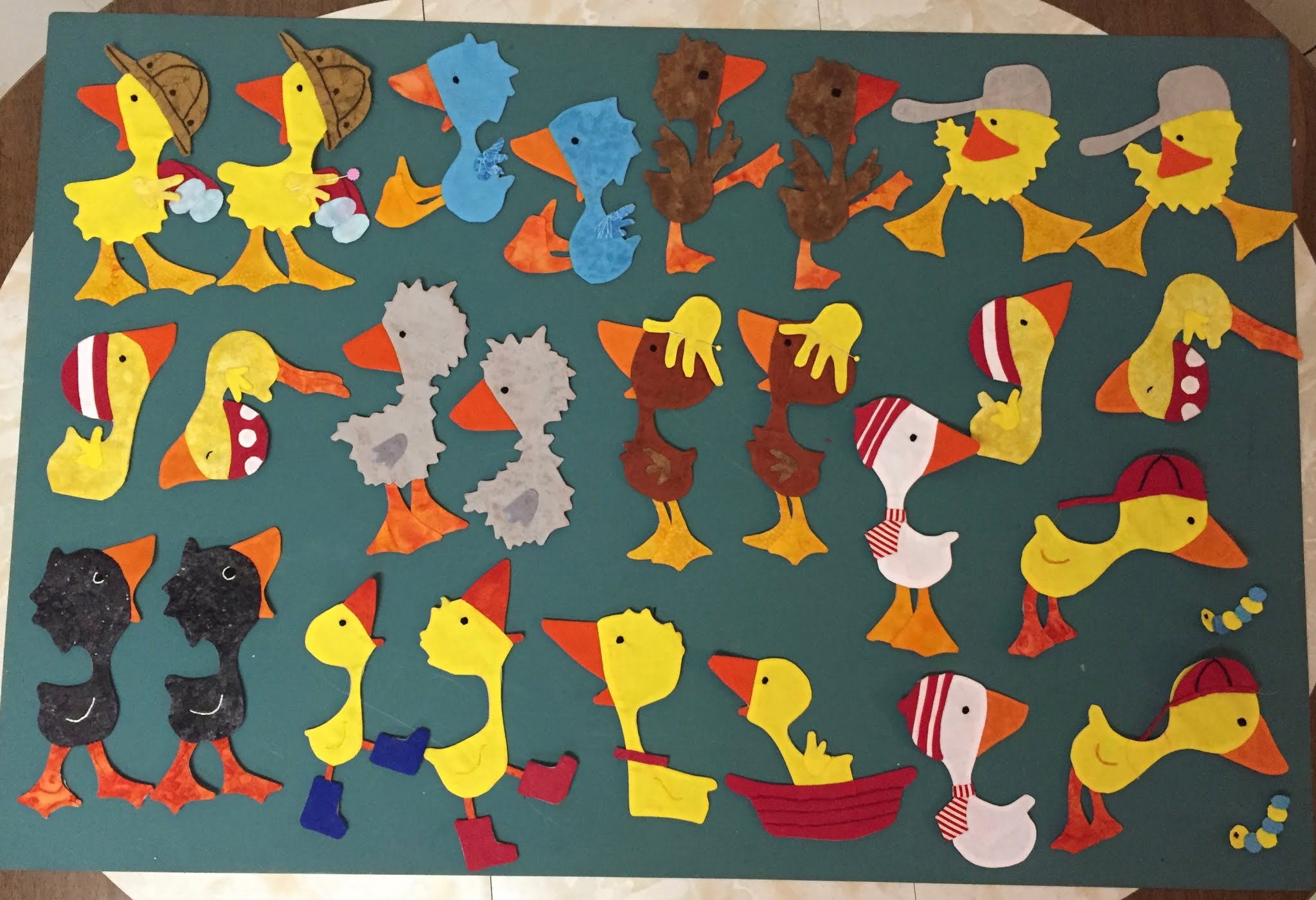
I have almost finished all the characters for my Olivier Dunrea quilt. I'm just trying to figure out the best way to create the red stripes for Gideon's friend Otto (the octopus). Should I sew them, embroider them or invest in some fabric pens and colour them in? It will get figured out eventually. After a short reading break I plan to start on the rest of the little animals and plants. Sometimes I'm overwhelmed by what I've taken on, but then I remember that it all gets accomplished bit by bit. 


Aside from sewing, I worked on a book review for Naomi Klein and Rebecca Stefoff's book about climate change. It was challenging. I haven't taken that many notes while reading since I was at university. At the same time as I was reading and writing about it, I was reading Silent Spring by Rachel Carson. I also had Crossing Home Ground by David Pitt-Brooke, a title about habitat loss in my part of the world, on the go. It was all pretty grim.

Titles with a 🍁 indicate this is a Canadian Author and or Illustrator. 

Clicking on the title will take you to the Goodreads page of the book. 

BLOG POSTS LAST WEEK

How to Change Everything: The Young Human's Guide to Protecting the Planet and Each Other by by Naomi Klein & Rebecca Stefoff

#IReadCanadian: Books For All Ages

PICTURE BOOKS

4 stars
  
In My Anaana's Amautik
by Nadia Sammurtok & Lenny Lishchenko (Illustrator) 🍁

This is told from the perspective of a child being carried in an amautik - a pouch at the back of their Inuit mother's parka. Connections are made from the experience of being inside it to the rest of their arctic environment. The beauty of the land is captured in both Sammurtok's words and Lishchenko's illustrations.

POETRY 

4 stars

Our Corner Store
by Robert Heidbreder & Chelsea O'Byrne (Illustrations) 🍁

This sequel to Rooster Summer, is another novel in verse based on the memories of the author's childhood. It tells the story of two siblings, their friends, and their relationship to the owners of the corner store in their neighbourhood. The rollicking poetry is full of the energy of childhood. Heidbreder captures the sounds and smells of a time gone by in these delightful poems. O'Byrne's illustrations add to these memories. The collection reminded me of being sent to the store to pick up grocery orders my mother phoned in. Imagine sending a four year old a block and a half to the store now!

NON FICTION


I was nine in 1962 when this beautifully written book was published. Rachel Carson sounded the alarm about the devastation wrought by our attempt to control insects, weeds and other 'pests' by spraying toxic chemicals  I might have read this book in my youth, but if I did, I have forgotten it. I do remember a conversation with my father about the local consequences of spraying DDT. Here in our orchard/vineyard community in the Okanagan Valley, not only were the birds silenced, the mouse population went out of control and began to destroy fruit trees. The local rattlesnakes, their primary predators, had also been decimated by the poison.
Carson shows us the consequences of an extractivist worldview where humans see themselves as masters of the planet. She takes the reader through episode after episode of the destruction of the natural world and shows how we harm ourselves as a consequence. Most profoundly, we see that any positive results are temporary at best. Because of the chemical's wholesale wreaking of armageddon to ecosystems, they ended up making matters worse. She finishes the book with alternative, and much more cost effective and efficient ways of dealing with the pests in our lives. These are the methods we use in our local garden today.
I couldn't help but make a connection between the subterfuge of chemical companies then and similar tactics used by the chemical & fossil fuel industries today.


In search of pristine bunchgrass meadows, Pitt-Brooke set off to walk from Kereomas and Osoyoos in the southernmost part of the Okanagan Valley here in British Columbia, to Williams Lake in the Cariboo region of the province. Along the way he reminisces about his past and ruminates on the history of the different areas. 
 
DISCWORLD NOVELS

5 stars

The Amazing Maurice and His Educated Rodents

I've read this one before and am happy to have read it again in the context of the rest of the series. It's one of a handful of best novels from the Discworld collection. It's also one of the few suitable for younger readers (aged 10 and older.) It's a twisted fairytale based on the Pied Piper of Hamelin theme. A group of rats, having eaten some kind of strange food, become sentient and start to talk and think like humans. Maurice, a cat, ended up in the same situation after eating one of them. They band together with Keith, a young flute player. The group travel from community to community fleecing the inhabitants after tricking them into believing they have a rat infestation and being saved by Keith, their Pied Piper.
Things change when they arrive in a new town where the village Rat Catchers have their own nefarious swindle going on. As nasty as they are, they are not the worse surprise for the group. A manipulative evil being gets inside and controls the mind of anyone who gets close to it.
This book is hilarious, heartwarming, and gruesome.

CURRENTLY 

The Pratchett novel I'm listening to is Night Watch. Otherwise, I am between books right. 

UP NEXT

I plan to read Twins by Varian Johnson, When You Trap A Tiger by Tae Keller and Measuring Up by Lily La Motte. I'll be reading and writing a review for a Netgalley title, The Incredible Nellie Bly by Luciana Cimino. I'm hoping to find time to start reading The Sixth Extinction by Elizabeth Kolbert. I've got an audiobook, On Fire: The Burning Case for A Green New Deal by Naomi Klein checked, but I'm not sure I can handle reading it in tandem with Elizabeth Kolbert's book.

PROGRESS ON MY READING GOALS 

#MustReadIn2021 5/25 

#MustReadNFIn2021 2/12 

#MustReadPBIn2021 13/100

Books by Canadian Indigenous Authors: 7/25 

Books by Canadian Authors: 19/100

Canada Reads 2021 1/5

Discworld Series 28/41 

Goodreads Reading Challenge: 70/333 

How to Change Everything: The Young Human's Guide to Protecting the Planet and Each Other by by Naomi Klein & Rebecca Stefoff

Thanks to NetGalley for the opportunity to read and review this book. It will be released February 23, 2021, by Puffin Canada.

"As the impacts of climate change get worse and worse, change for the better means much more than trying to keep temperatures down. It means rebuilding society to not just stop climate change, but to achieve climate justice. It means changing the way we live so we heal the planet and secure a fair and livable future for all people, with no one and no community left behind."

How to Change Everything is a compendium of much of Klein's work, organized and assembled in a format for young readers. It's an easy and compelling read that's an ideal overview of climate change for all of us. I'm impressed by how thorough and thoughtful it is. The authors manage to introduce important vocabulary and integrate economic and environmental realities into a coherent narrative. 

The publication includes many different nonfiction text features. The layout includes highlighted sections that tell the stories of different climate activists. Readers will learn about people like Esperanza Martinez, Aldo Leopold, Rachel Carson, Jackson Hinkle, Celeste Tinajereo, and more. There are photographs, labeled diagrams, and flowcharts. The back matter includes a public letter signed by important authors and individuals in the environmental movement. They are requesting the preservation of ecosystems to remove large amounts of carbon from the atmosphere. There is also a bibliography titled, Find Out More, and a Notes section that reference Klein's original work. I wish it had an index and glossary. Perhaps the final copy will. The information is organized into three sections. The first one looks at the world as it now is. The second looks at the history of how we got here and the the third examines strategies for where we go now. 

In section one, the authors examine where we now are with regards to climate change. They write about Greta Thunberg and the student strike for climate change. Examples are provided that explore what climate change looks like. They write in depth about the tragedy of New Orleans before and after the hurricane. We are shown how neoliberal/free market policies failed the city in numerous ways. First it failed to ensure protection for the citizens in the event of such a catastrophe. Second, the for profit recovery efforts not only wasted money, but also made it impossible for people to be able to afford to return to their homes. This is Disaster Capitalism in action: "When the rich and powerful take advantage of painful shocks to widen existing inequalities instead of correcting them." It resulted in the decimation of features considered necessary for the public good. Even the education system was privatized in the rebuilding of New Orleans. 

The authors present alternatives to this kind of disaster response with the proviso that "recovery and green projects must lift up communities, not just corporations." 

Aspects of different sacrifice zones and the role of environmental racism are revealed. We are shown how land and people are sacrificed because of our dependence on fossil fuels. Indigenous and poor people are generally the victims of these kinds of climate cruelty. Ultimately, "people who pollute the least end up suffering the most." We see this climate injustice manifest in 'white power eco-fascism' and the attempt to keep climate refugees out of the country. 

Climate change is clearly defined. It includes both the science underlying it, and the many ramifications of it. The authors explain the terms carbon budget: the amount of carbon we can add to the environment before we have a total disaster on our hands, and climate debt: the amount owed by developed countries to developing ones because of the damage caused by their disproportionately large contributions to climate change. Historically western nations have used most of the budget: 1/5th of the population has used up 2/3rds of the CO2 emissions. 

The next section looks at the history of fossil fuel development, the beginnings of modern capitalism, and the emergence of the environmental movement. The development of coal powered steam engines resulted in fossil fuel based manufacturing. This in turn lead to the onset of consumerism and modern capitalism. The authors show how industrialization goes hand in glove with a significant alteration in our relationship to the earth. Rather than being caretakers, extractivism became the new normal. Europeans saw themselves as masters of everything on the planet. It was theirs to use and colonize. Early 'sacrifice zones' included the coal miners who ended up with black lung, polluted water, slavery and the killer smogs in London. 

The environmental movement arose in response to the decimation of the planet from industrialization. It began with 19th and 20th century conservatism. Upper class individuals and organizations worked to save wild places. It's because of them we have national parks here in North America. Aldo Leopold, often referred to as the father of wildlife ecology and Rachel Carson, the mother of the environmental movement, provided alternatives to the extractivist philosophy and a way to live as caretakers of the earth. Carson is especially known for highlighting the disaster of chemical spraying. The legal system was first used in 1948 in the USA to pass a law to control water pollution. Other laws followed to protect the air, wilderness and rivers. Some legislation focused on protecting human health and others to preserve the natural world. The Superfund act in 1980 was passed to force industry clean up and or pay for cleaning up their messes. (I wish it had worked. Here in BC in 2021, we are left cleaning up the toxic messes from mining operations. The oil/tar sands in Alberta are a whole other debacle.)

Carbon emissions continued to increase, but 1988 was a pivotal year. Industry scientists had been forecasting climate change since the late 1970's. It was a recognized fact. Everyone was onside and aware of the need for change. All political parties accepted it. At the World Conference on Changing Atmosphere in Toronto, Canada, world leaders agreed to reduce their emissions. 

And yet, it all fell apart. 

The authors present a couple of reasons. One, the human nature theory presumes that humans "are not capable of sacrificing present convenience to forestall a penalty imposed on future generations." The other is the rise of neoliberal/free market ideology. This led to a decrease in regulation and a rise in profit and economic growth no matter the waste or cost. Out of this emerged a deliberate system of denial and lies. Even when corporations seemed to be onside, they were mostly engaged in greenwashing: attempts to encourage surface level changes that made no significant difference in carbon emissions. 

Today we are at a place where we have to cut our global emissions in half by 2030, and eliminate them by 2050 if we are to avoid catastrophic climate disaster. 

The words of Brad Werner, a systems theorist, provide hope. He asserted that "the balance between earth's resources and ecosystems on one hand and human consumption on the other is becoming unstable." Yet he goes on to affirm the role of resistance to change this. Examples of social movements and laws are provided to show what people have done to protect their homes and the planet. 

The final section deals with strategies for dealing with where now are. A number of ideas are presented and evaluated. Some like Carbon Capture and Geoengineering are not only risky, they don't address the increase in emissions. Other ideas like Planting Trees and investing in Alternative Energy by way of solar and wind power are looked at positively. 

The authors continue on to talk about a Green New Deal. They begin by explaining the successes and problems of the original New Deal, and then proceed to outline a format for a new one. The three main principles of it are as follows:

1. Stop new fossil fuel endeavours

2. Slow down and end existing production 

3. Increase the use of renewable energy

They go on to show how hundreds of millions of new jobs would be created from the third principle. 

In the adoption of a Green New Deal, "We must make sure that no one is excluded or left behind because they lack political power. We must recognize that when it comes to climate change, business interests are not the same as the people's and the planet. We must not let corporate and business interests make all the decisions, although we must also work to sustain our economies, including businesses that want to be part of the solution. We must seek deep change based in shared, democratic decision-making, with all of our voices heard."

Puerto Rico and Greensburg Kansas are presented as communities who were able to stave off disaster capitalism. They managed to reinvent themselves focusing on community based, sustainable solutions like those proposed in the Green New Deal. 

The last part of the book includes a "toolkit for young activists." Numerous strategies for how individuals can become activists in big ways and small are highlighted. Young activists who have been involved in making change are introduced. Some are involved changing their schools and community. Others are working at a more global level. Felix Finkbeiner in Germany, working for larger change, initiated the planting of over a million trees. Autumn Peltier, an Indigenous Canadian Water Warrior, told the United Nations, "We can't eat money or drink oil." 

Ultimately, the authors of this book assert that while we might not be able to change the past, we can and must change the future. It's imperative to start NOW! 

Purchase one copy for yourself and extra copies for the young activists in your life.

#IMWAYR February 15, 2021

Hello out there. It's #IMWAYR time again, when readers share what they have been reading and find out what others have been up to in the past week. Kathryn hosts the adult version of this meme at Book Date. Jen at Teach Mentor Texts and Kellee and Ricki at Unleashing Readers host the kidlit rendition. Whatever you are looking forward to in your next great read, these are fabulous places to start your search.

I Read Canadian Day is this Wednesday, February 17th!

Last week I finished a collection of blog posts highlighting some of the best Canadian literature I've read in the past few years. You don't have to be Canadian to help us celebrate! I'm hoping that everyone will find something to read on those lists.  


It was cold last week. I know our -10 C and -11 C isn't a big deal for many parts of the continent, but with that north wind, it was plenty chilly for me. I borrowed my partner's balaclava and planned out my daily walking routes so that I would walk as little as possible into the wind. It warmed up to -3 on Sunday and is supposed to continue the warming trend into next week. We've only had skiffs of snow so far with more light flurries to come.  

Titles with a 🍁 indicate this is a Canadian Author and or Illustrator. 

5 stars

To the Sea by Cale Atkinson
 🍁
This is a gorgeous story of friendship.
Tim feels invisible until he meets Sam, a stranded whale. No one else noticed him. Tim felt that no one noticed him either. Both of them felt better knowing they weren't invisible. Tim goes out of his way and achieves the impossible to get his new friend back to the sea. It looks like he might just make a new land based friend at the end of it.
Orange text is set against a palette of bright orange, dark green and blue stunning illustrations.

As a quilter, I am predisposed to love this book. I do. It's the story of a young girl who feels like an outsider in her new school until her mother and teacher work together to create an inclusion quilt. Each student in her class creates a template with their name written in Arabic. Adults take these and turn them into a paper quilt that is presented on a bulletin board outside the classroom.
I adored the quilt Kanzi's teita (grandmother) in Egypt made. We creators of fabric art, no matter our skills, are connected around the world through our passion for creating things of beauty out of bits of fabric.


Let me begin by saying that this isn't a European style traditional picture book. It tells the story of a young Inuit boy and his uncle who are walking along the beach to the family's annual camp. On the way they meet up with some of his cousins who are fishing through the ice. Along the way the boy and his uncle talk about the different plants and animals they see. The boy has come from the south where he lives with adopted parents. It's through these walks with the uncle that he is able to connect to, and become part of his roots. I admit to wanting to know more about why the boy was living in the south to start with.
Some people might think that nothing is going on here, but I disagree with them. Who says the activities of daily life can't be a story? This is an Inuit author and teacher who is writing for her community. Qin Leng's illustrations are lovely but I wish the pages were not so text heavy. That said, the book doesn't have to fit into anyone's Euro-Western ideals.
I would love to have had this book back in the day when I was in a classroom teaching my students about Indigenous Canadians. I appreciate that it integrates traditional knowledge and modern life.
The back of the book contains more information about these different plants and animals as well as explaining their traditional Inuit uses.

NON FICTION PICTURE BOOKS

5 stars

What Is a Refugee?
by Elise Gravel 🍁

This is a brilliant introduction to refugees for younger readers. In simple text and colourful illustrations, Gravel explains what a refugee is and why people like you and me had to leave their country. The back matter contains illustrated pictures of refugee kids who told Gravel something about themselves. It also contains a list of famous refugees.
My only quibble with this book is that I wish there had been a page and statement talking about climate refugees.

5 stars

The Nest That Wren Built
by Randi Sonenshine & Anne Hunter  (Illustrations)

Thanks to Linda Bai for telling me about this book. Rarely do I find rhyming poetry in picture books that is this lovely and works so well.
The story line follows a couple of wrens as they build a nest, lay and hatch eggs, and raise their brood from hatchlings to fledglings.
Anne Hunter's soft, exquisitely detailed illustrations are a wonderful companion to Sonenshine's poem.
I appreciated the Glossary and Wren Facts sections in the back matter.

NON FICTION

4 stars

Navigate Your Stars
 by Jesmyn Ward
I've listened to this about 4 times and can't come up with words to describe how profound it is. It is inspiring and hopeful as Ward tells readers that persistence and adaptation are the strategies that will enable you to achieve your dreams. Last fall I saw Ibram X. Kendi and Jesmyn Ward In Conversation, as part of the Thinking While Black series hosted by the Phil Lind Initiative at UBC’s School of Public Policy and Global Affairs. She talked about her early years and how hard it was/is for Black people growing up where she came from. In comparison, this speech, where racism is never named, seems to gloss over the very real obstacles faced by many Black, Indigenous and People of Colour. 

I just finished this Netgalley title and will have a full review next week sometime. In a nutshell, the authors take Klein's writing for adults and adapt it for teens. It is brilliantly done. It will be released on February 23rd. Preorder it. 

NOVELS

4 stars

The Spellman Files
by Lisa Lutz & Christina Moore (Narrator)

I enjoyed this introduction to the series. The characters are hilarious and the mystery was interesting. I admit to being surprised as heck by the ending.
 
DISCWORLD NOVELS


3 stars

The Last Hero
by Terry Pratchett & Stephen Briggs (Narrator)

From what I have read of this book, I think you need to read it rather than just listen to it. Apparently it is a perfect marriage between Terry Pratchett's words and Paul Kidby illustrations.
The Silver Horde, a group of aged barbarians led by Cohen the Barbarian, head off to return fire to the gods. While they are there, they plan to blow the place up. If they are successful it will mean the end of the Discworld. A group of Ankh-Morporkians create a plan to stop them. It involves sending Rincewind, Leonard of Quirm, and Captain Carrot Ironfoundersson in a dragon powered spacecraft to stop them.

CURRENTLY 

I'm in the middle of listening to Silent Spring by Rachel Carson and have to finish it before it has to go back to the library. I listen while I am out on my walks and end up swearing to myself regularly at the stupidity of humanity. The Pratchett novel I'm listening to is The Amazing Maurice and His Educated Rodents. Other than that, this week I'm planning on reading primarily Canadian authors. I'll be continuing with Crossing Home Ground by David Pitt-Brooke.  

UP NEXT

I'll be starting Our Corner Store by Robert Heidbreder. I've abandoned hope that I will find time to get to the Canada Reads before the debate, so I will see what other Canadian titles I have at hand. 

PROGRESS ON MY READING GOALS 

#MustReadIn2021 4/25 

#MustReadNFIn2021 2/12 

#MustReadPBIn2021 12/100

Books by Canadian Indigenous Authors: 6/25 

Books by Canadian Authors: 17/100

Canada Reads 2021 1/5

Discworld Series 27/41 

Goodreads Reading Challenge: 64/333 

#IMWAYR August 24, 2020

Hello out there. It's #IMWAYR time again, when readers share what they have been reading and find out what others have been up to in the past week. Kathryn hosts the adult version of this meme at Book Date. Jen at Teach Mentor Texts and Kellee and Ricki at Unleashing Readers host the kidlit rendition. Whatever you are looking forward to in your next great read, these are fabulous places to start your search.


Eight days of company really cut deep into my reading life. No sooner did everyone leave, I headed off towards the big city for a medical test and time with my grandkids. At least here I am reading books with the little ones. I'm not including those here because I have already written about most them previously.

Before I leave I hope to get to Kidsbooks to pick up a couple of copies of Old Rock is Not Boring. I read it with my grandkids a while ago and when they were visiting me, my grandson got very irate that I no longer had it. He understands about libraries but wanted me to go check it out right now. 

Titles with a 🍁 indicate this is a Canadian Author and or Illustrator. Clicking on the title will take you to the Goodreads page of the book.

NONFICTION PICTURE BOOKS 

I picked this up from the library, came home and read it. Then my granddaughter joined me on the sofa and we started it from the beginning. She looked at the first page and proclaimed, "It's so beautiful!" I agree. It was my first thought upon opening the book. Lindsay Moore's illustrations are just stunning. Each page is worthy of hanging on a wall. Her poetic text tells the experience of a year in the life of a polar bear from the polar bear's perspective.
The back matter contains additional information about polar bears and other animals mentioned in the book. While climate change isn't mentioned in main body of the text, it is addressed in these notes.
If readers already have an understanding of what is happening in the arctic because of climate change, they will understand why it may well lead to the extinction of this remarkable animal.

GRAPHIC NOVELS

5 stars
The Big Break by Mark Tatulli

This story of two boys as their friendship deteriorates broke my heart a little bit. There are lots of stories about girl friendships disintegrating, but this is the first one about boys that I remember. For this reason alone, it's a must purchase for all school libraries.
Andrew and Russ are working on a video about the Jersey Devil. They plan to enter it into a contest in hopes of winning and getting a head start on their future careers as filmmakers. Unfortunately the two boys end up maturing at different rates. Russ ends up with a girlfriend and Andrew, who lost his father 18 months previously, feels abandoned. Add to that their inability to communicate sincerely with each other and it isn't long before they have a big blow up and stop talking altogether.
It takes a winter campout with others and a near disaster before they mend their fences.

NOVELS

4 stars
How It Went Down (How It Went Down #1) by Kekla Magoon & Narrators: Cherise Boothe, Shari Peele, Kevin R. Free, Avery R. Glymph, & Patricia Lucretia Floyd

Kekla Magoon makes space for multiple perspectives in this novel about the killing of a black teen by a white man. The scenario is all too familiar if you have been paying attention to social media in the past few months. How It Went Down is not only about the reality of the shooting, but about how it is experienced, twisted, and justified by different segments of the community.

4 stars
Light It Up (How It Went Down #2) by Kekla Magoon & Narrators: Landon Woodson, Karen Chilton, Cherise Boothe, Eevin Hartsough, Christopher Carley, Peter Jay Fernandez, T. Ryder Smith, Julian Thomas, Kevin R. Free & Korey Jackson

As in How It Went Down, Kekla Magoon makes space for multiple perspectives. This time she deals with the killing of a black special needs teen by a white policeman. It is not only about the reality of the shooting, but about how it is experienced, twisted, and justified by different segments of the community. What was especially fascinating was connecting with many of the same characters in the first book. The cast of narrators were brilliant.

Both of these books put me in mind of Walter Dean Myers intense and gritty work.

NONFICTION

5 stars
Guns, Germs, and Steel: The Fates of Human Societies (Civilizations Rise and Fall #1) by Jared Diamond


This pulitzer award winning book began with the author attempting to identify the roots of inequality in the world. He concludes that it is essentially a function of geographical luck. People who lived in areas with plants and animals that were easier to domesticate ended up having resources to support the development of technology. I highly recommend this book and am looking forward to book club and talking about it! If you don't have time to read it, You might enjoy the three national geographic documentaries based on it. I ended up watching the first 1 1/2 and plan to finish them all. I'm also planning on reading Collapse, the next in the series. 


Part 2:
https://www.youtube.com/watch?v=HULhXXnMlww
Part 3: 
https://www.youtube.com/watch?v=rVShQfYcX28

CURRENTLY

Everything was put on hold while I read Guns, Germs and Steel, but I'm back to reading Yara's Spring by Sharon McKay & Jamal Saeed. I started it all over again. I just started listening to The Vanderbeekers to the Rescue by by Karina Yan Glaser. 

UP NEXT

I hope to get to Audacity by Melanie Crowder. I picked Molly Bang's nonfiction picture books about sunlight and plan to read and write a blog post about them. The art in them is spectacular!

PROGRESS ON MY READING GOALS
  
Big Books Summer 2020 8/10 
#MustReadIn2020: 18/25 
#MustReadNFIn2020: 7/25
Books by Canadian Indigenous Authors: 17/25 100 
Books by Canadian Authors: 105/100 
 Goodreads Reading Challenge: 241/333